
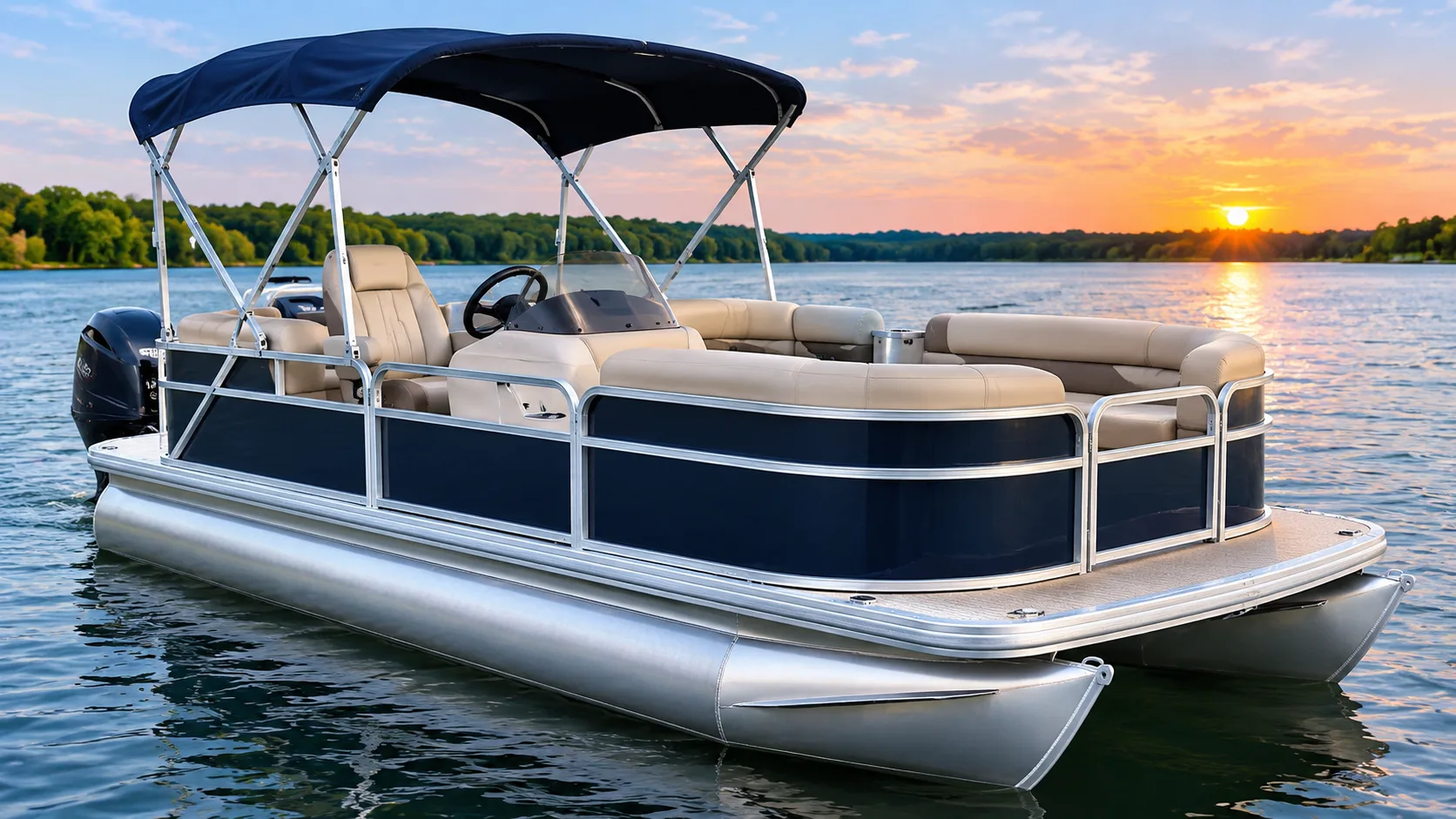
If you enjoy spending time on the water, you have probably seen a large boat with a flat deck, comfortable seating, and plenty of room for passengers. This type of boat is called a pontoon boat. It is popular among families, groups of friends, and people who enjoy relaxing on lakes and other calm waterways.
Pontoon boats are different from traditional fishing boats and speedboats. Instead of having a single deep hull, they use two or three large, hollow tubes called pontoons to stay afloat. These tubes provide stability and support a wide deck where passengers can sit, move around, enjoy meals, and participate in different water activities.
Whether you want to enjoy a peaceful afternoon, go fishing, take a sightseeing trip, or spend time with family, a pontoon boat offers plenty of possibilities.
But what is a pontoon boat, how does it work, what are its different types, and is it suitable for your next boating adventure? Here is everything you need to know.
Key Takeaways
- A pontoon boat is a recreational boat that uses two or three hollow tubes to stay afloat.
- Its wide, flat deck provides plenty of space for passengers, seating, and recreational activities.
- Pontoon boats are popular for family outings, fishing, swimming, and sightseeing.
- They are generally more stable than many traditional small recreational boats.
- Different types include fishing pontoons, luxury pontoons, cruising pontoons, and performance pontoons.
- Pontoon boats are best suited for lakes, rivers, and calm coastal waters, depending on their design and weather conditions.
What Is a Pontoon Boat?
A pontoon boat is a recreational boat designed with two or three long, hollow tubes underneath a flat platform. These tubes are known as pontoons or floats. They provide buoyancy and keep the boat above the water.
Most pontoon boats have a large rectangular deck with comfortable seats, railings, a steering console, and an outboard motor. Their open design makes them suitable for carrying several passengers and enjoying different activities.
Unlike traditional boats that use a V-shaped hull, pontoon boats rely on their floating tubes for support. This design creates a wide and stable platform.
Pontoon boats are commonly used on lakes, rivers, and other relatively calm waterways. Some larger and specially designed models can also operate in suitable coastal waters.
They are especially popular with families because passengers have plenty of room to sit, walk around, relax, and enjoy the surroundings.
How Does a Pontoon Boat Work?
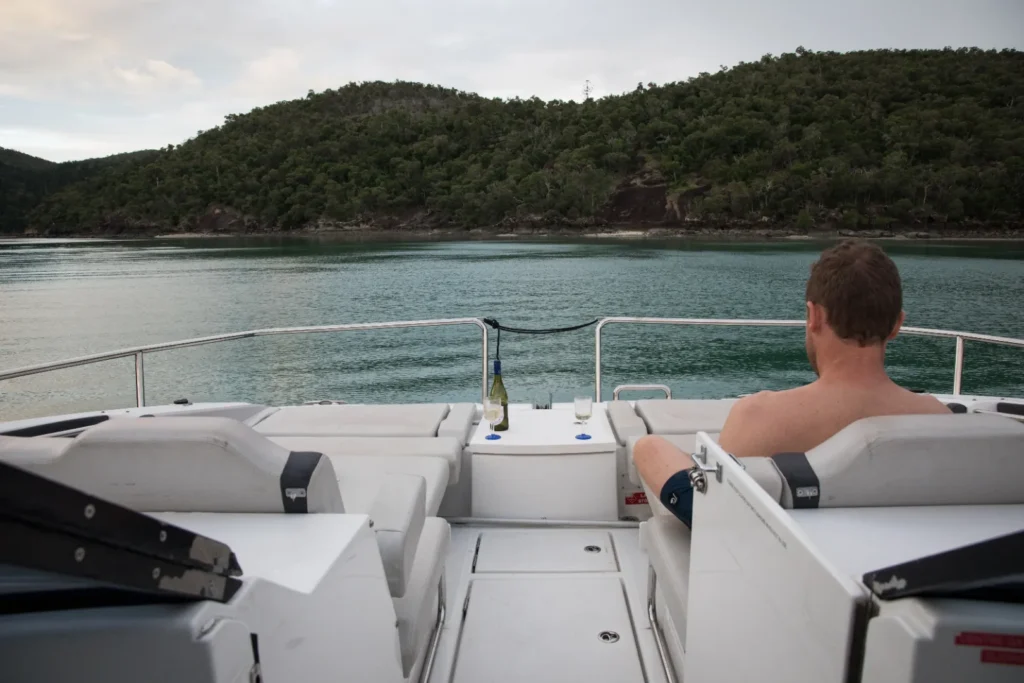
A pontoon boat works through the principle of buoyancy. Its hollow tubes displace water, creating an upward force that supports the weight of the boat, passengers, and equipment.
Most pontoons are made from marine-grade aluminum because it is lightweight, strong, and resistant to corrosion.
Here is how the main parts work together.
1. Pontoons
The pontoons are the most important part of the boat. They are long, sealed tubes located underneath the deck.
They provide the buoyancy needed to keep the boat floating. Most recreational pontoon boats have two pontoons, while some models use three for additional support and performance.
2. Deck
The deck is the flat platform built above the pontoons. It provides space for seating, tables, fishing equipment, and other accessories.
The wide deck is one of the biggest reasons people choose pontoon boats.
3. Outboard Motor
Most pontoon boats use an outboard motor mounted at the back.
The engine provides the power needed to move the boat through the water. Motor size depends on the boat’s design, weight, and intended use.
4. Steering Console
The steering console is where the captain controls the boat. It usually includes a steering wheel, throttle, gauges, and other controls.
Some modern pontoon boats also have GPS navigation, touchscreen displays, and sound systems.
5. Railings
Railings are installed around the deck to help passengers remain within the designated seating and walking areas.
They also provide additional support when people move around the boat.
What Are the Different Types of Pontoon Boats?
Pontoon boats come in different designs depending on how they will be used. Some are made for relaxing with family, while others are designed for fishing or higher speeds.
Here are the most common types.
1. Recreational Pontoon Boats
Recreational pontoon boats are designed for general boating activities.
They usually have comfortable seating, a large open deck, storage areas, and a sound system. Families often use them for sightseeing, relaxing, and spending time on the water.
These boats are a good choice for people who want a versatile option for everyday recreational use.
2. Fishing Pontoon Boats
Fishing pontoon boats are designed for anglers who want a comfortable fishing experience.
They may include:
- Fishing chairs
- Rod holders
- Livewells for keeping bait or caught fish
- Fishing stations
- Tackle storage
- Fish finders
Some models have dedicated fishing areas at the front and back of the boat.
3. Luxury Pontoon Boats
Luxury pontoon boats offer additional comfort and premium features.
They may include plush seating, upgraded flooring, refrigerators, premium sound systems, LED lighting, and entertainment areas.
Some high-end models also have changing rooms and enclosed bathroom facilities.
These boats are ideal for people who want a more comfortable boating experience.
4. Performance Pontoon Boats
Performance pontoon boats are designed for higher speeds and better handling.
Many use three pontoons, which are commonly called tritoons. Their additional center pontoon can improve stability and performance when paired with an appropriate hull and engine setup.
They may also feature more powerful engines, upgraded steering systems, and performance-oriented designs.
5. Party Pontoon Boats
Party pontoon boats are designed for social gatherings and group activities.
They usually have large seating areas, open deck layouts, entertainment systems, and plenty of space for passengers.
Some models are designed for celebrations, sightseeing tours, and group outings.
What Are Pontoon Boats Used For?
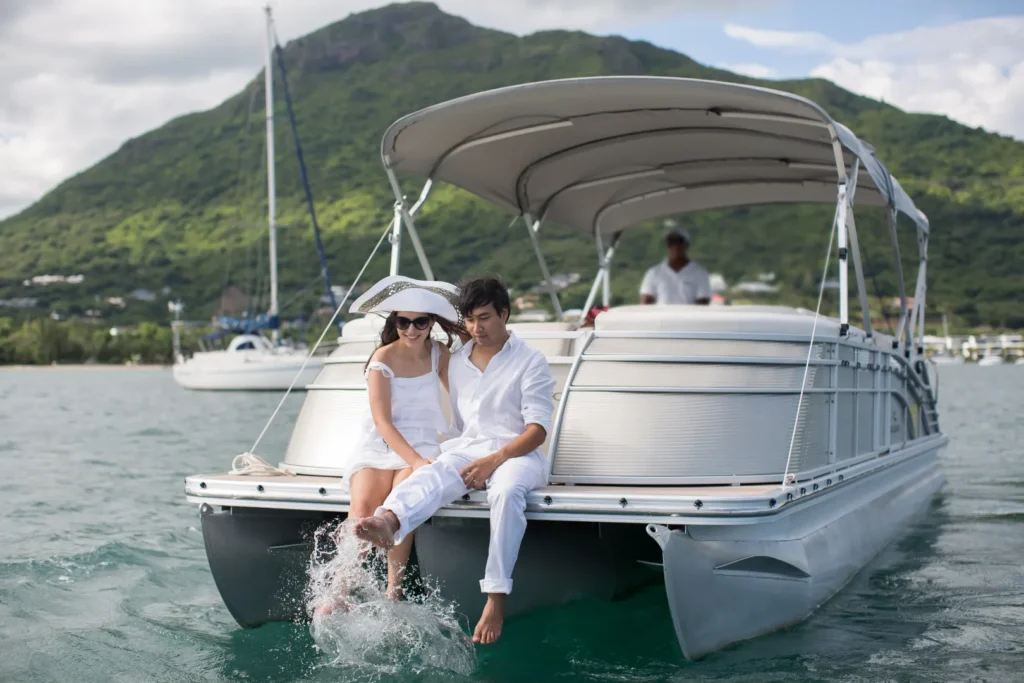
One of the biggest advantages of pontoon boats is their versatility. They can be used for several recreational activities, depending on their size, equipment, and design.
Family Outings
Pontoon boats are popular for family outings because they provide plenty of seating and space.
Families can spend time together, enjoy the scenery, have snacks, and relax on the water.
Fishing
Many anglers use pontoon boats because their wide platforms provide room for fishing equipment and multiple passengers.
The stable design also makes it convenient to fish from a stationary position in suitable weather conditions.
Swimming
Pontoon boats can be used as a base for swimming activities. Many models include boarding ladders that make it easier to enter and exit the water.
Passengers can anchor in a permitted swimming area and enjoy the water.
Everyone should wear appropriate safety equipment and follow local boating rules.
Sightseeing
The open design makes pontoon boats suitable for sightseeing trips.
Passengers can enjoy views of lakes, rivers, coastal landscapes, and wildlife while traveling at a comfortable speed.
Water Sports
Some performance pontoon boats are designed to support activities such as tubing and certain recreational water sports.
However, not every pontoon boat is suitable for towing. Always check the manufacturer’s specifications, engine capacity, and passenger limits before participating.
What Are the Advantages of a Pontoon Boat?
Pontoon boats have become popular because they offer several benefits compared with many traditional recreational boats.
1. More Space
The wide deck provides plenty of room for passengers, seating, and equipment.
This makes pontoon boats a good option for families and groups.
2. Good Stability
The two or three pontoons provide a wide floating platform.
This design generally offers good stability in calm water, making the boat comfortable for passengers.
3. Comfortable Seating
Most pontoon boats have spacious seating areas with cushions and backrests.
Some models also include lounge seats, dining tables, and entertainment systems.
4. Easy to Use
Pontoon boats are relatively straightforward to operate compared with some other recreational boats.
However, operators still need to understand navigation, steering, docking, weather conditions, and local boating regulations.
5. Multiple Activities
A single pontoon boat can be used for fishing, swimming, sightseeing, relaxing, and social gatherings.
This flexibility makes it useful for different types of boating trips.
6. Easy Boarding
Many pontoon boats have open deck layouts and boarding ladders.
These features can make getting on and off the boat more convenient, especially when passengers are swimming or spending time near a dock.
What Are the Disadvantages of a Pontoon Boat?
Although pontoon boats offer many advantages, they are not perfect for every boating situation.
Here are some limitations to consider.
1. Not Ideal for Rough Water
Traditional pontoon boats are generally better suited to calm water.
Large waves and strong winds can make the ride uncomfortable and may create safety risks.
2. Limited Maneuverability
Some pontoon boats may not turn as sharply or handle as responsively as certain traditional V-hull boats.
Their performance depends on the hull design, motor, and operating conditions.
3. Lower Speed on Some Models
Standard pontoon boats are often designed for comfortable cruising rather than high speeds.
Performance models can travel faster, but they generally require more powerful engines.
4. Storage and Transportation
Pontoon boats are wide and can be difficult to transport or store.
Owners may need a suitable trailer, boat lift, or marina space.
5. Fuel Consumption
Fuel use depends on engine size, boat weight, speed, and passenger load.
Larger engines and faster cruising speeds can increase fuel consumption.
How Fast Can a Pontoon Boat Go?
The speed of a pontoon boat depends on its engine, size, weight, number of pontoons, and overall design.
Many standard recreational pontoon boats travel at approximately 15 to 25 miles per hour.
Performance-oriented models with larger engines may reach speeds of 30 to 50 miles per hour or more under suitable conditions.
These figures are general estimates, not guaranteed speeds. Actual performance varies between models.
If you are planning to purchase a pontoon boat, check the manufacturer’s speed and engine specifications rather than relying only on advertised performance figures.
How Many People Can Fit on a Pontoon Boat?
The passenger capacity depends on the boat’s size, design, and manufacturer’s safety rating.
Smaller pontoon boats may accommodate around 6 to 8 people, while larger models may carry 10 to 15 passengers or more.
However, passenger capacity is not determined by seating alone. Weight limits are also important.
The combined weight of passengers, equipment, fuel, and other supplies must remain within the manufacturer’s limits.
Always follow the capacity plate and never overload the boat.
How Much Does a Pontoon Boat Cost?
The cost of a pontoon boat depends on its size, engine, features, brand, and condition.
Here are some general price ranges in the United States:
| Pontoon Boat Type | Estimated Price |
| Small basic pontoon boat | $15,000 to $30,000 |
| Standard recreational pontoon | $25,000 to $50,000 |
| Fishing pontoon boat | $25,000 to $55,000 |
| Luxury pontoon boat | $60,000 to $100,000+ |
| High-performance pontoon boat | $50,000 to $120,000+ |
These are broad estimates. Actual prices vary depending on the manufacturer, engine package, equipment, and market conditions.
Used pontoon boats can be less expensive, but buyers should carefully inspect the pontoons, deck, engine, electrical systems, and overall condition before purchasing.
Pontoon Boat vs. Traditional Fishing Boat: What Is the Difference?
Pontoon boats and traditional fishing boats are designed for different purposes, although both can be used for recreational fishing.
The biggest difference is their construction and available space.
| Pontoon Boat | Traditional Fishing Boat |
| Uses two or three floating tubes | Usually uses a single hull |
| Has a wide, flat deck | Often has a narrower deck |
| Provides more seating space | Usually has a more functional fishing layout |
| Suitable for relaxing and group outings | Designed primarily for fishing |
| Generally best in calm water | Some models handle rougher water better |
| Often offers more room for passengers | May offer better maneuverability |
The right choice depends on how you plan to use the boat. If you want space and comfort, a pontoon boat may be a better option. If fishing performance and handling are your priorities, a traditional fishing boat may be more suitable.
Is a Pontoon Boat Good for Beginners?
Yes, pontoon boats can be a good option for beginners because they are generally stable and offer plenty of space.
Their open deck design makes it easier for passengers to move around, while the steering and controls are relatively straightforward.
However, beginners should not assume that operating a pontoon boat is risk-free.
Before taking one onto the water, learn basic boating rules, understand navigation markers, check weather forecasts, and practice docking and maneuvering.
Taking a boating safety course is also a good idea.
How to Maintain a Pontoon Boat
Regular maintenance helps keep a pontoon boat in good condition and reduces the risk of unexpected problems.
Here are some important maintenance practices.
- Clean the deck: Remove dirt, food, and debris after every trip.
- Inspect the pontoons: Check for dents, damage, leaks, and signs of corrosion.
- Maintain the engine: Follow the manufacturer’s maintenance schedule for oil changes, filters, and servicing.
- Check electrical systems: Inspect batteries, lights, wiring, and navigation equipment.
- Protect the upholstery: Clean seats regularly and use suitable protective products.
- Inspect safety equipment: Make sure life jackets, fire extinguishers, and emergency equipment are available and in good condition.
- Store the boat properly: Use suitable covers and follow recommended storage procedures when the boat is not in use.
Regular inspections are especially important if the boat is used frequently or stored in saltwater environments.
FAQs About Pontoon Boats
1. What is a pontoon boat used for?
Pontoon boats are used for recreational activities such as fishing, swimming, sightseeing, family outings, and relaxing on lakes and rivers.
2. Why is it called a pontoon boat?
It is called a pontoon boat because it uses hollow floating tubes called pontoons to provide buoyancy and support the deck.
3. How many pontoons does a pontoon boat have?
Most pontoon boats have two pontoons. Some models have three, which are commonly known as tritoons.
4. Are pontoon boats safe?
Pontoon boats can be safe when operated correctly and in suitable water conditions. Operators should follow passenger limits, wear life jackets, and avoid rough weather.
5. Can a pontoon boat go in the ocean?
Some specially designed pontoon boats can operate in suitable coastal waters. However, standard recreational models are generally better suited to lakes and calm waterways. Open ocean conditions are not appropriate for most pontoon boats.
6. How long does a pontoon boat last?
A well-maintained pontoon boat can last 20 years or longer. Its lifespan depends on construction quality, engine maintenance, water conditions, storage, and frequency of use.
7. Can you fish from a pontoon boat?
Yes. Pontoon boats provide plenty of deck space for fishing equipment, rod holders, and multiple anglers. Some models are specifically designed for fishing.
8. Do pontoon boats have bathrooms?
Some larger luxury pontoon boats include enclosed changing areas or portable toilet facilities. However, bathrooms are not standard on most models.
9. Are pontoon boats fuel efficient?
Fuel efficiency depends on the engine, boat size, weight, speed, and operating conditions. Smaller engines and moderate cruising speeds generally use less fuel.
10. What is the difference between a pontoon boat and a tritoon?
A pontoon boat typically has two floating tubes, while a tritoon has three. The additional center pontoon can improve performance and handling when the boat is properly designed.
Conclusion
A pontoon boat is a versatile recreational boat that offers space, comfort, and stability for different activities on the water. Its unique design, which uses two or three floating tubes, makes it a popular choice for families, fishing enthusiasts, and people who enjoy relaxing outdoors.
Whether you want to spend a day fishing, take a sightseeing trip, enjoy swimming, or organize a gathering with friends, a pontoon boat can provide a comfortable way to experience the water.
Before choosing one, consider its size, passenger capacity, engine power, features, and intended use. With the right boat and proper safety precautions, you can enjoy many memorable days on the water.