
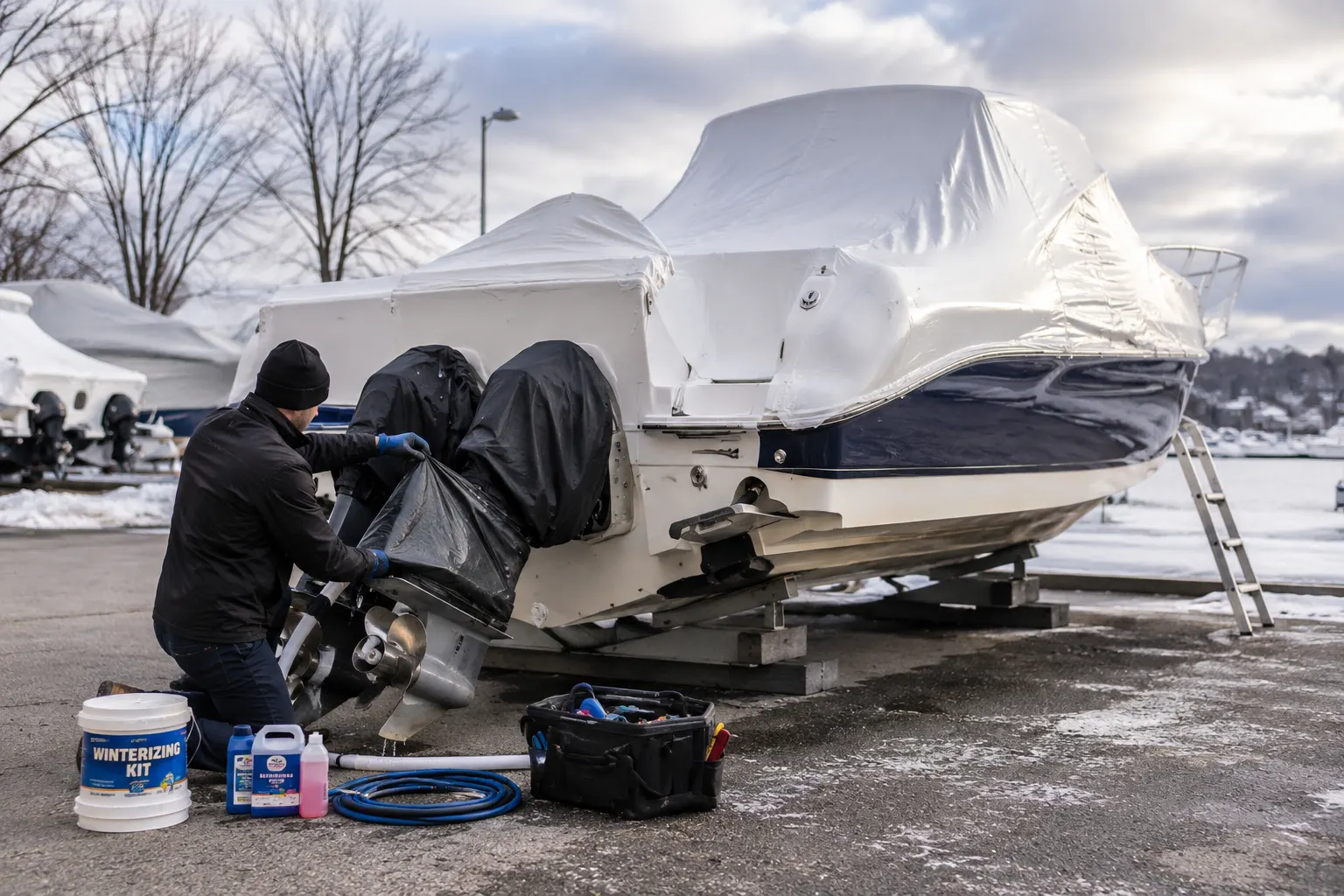
Knowing how to winterize a boat is one of the most important responsibilities of boat ownership. Proper winterization helps protect your boat from freezing temperatures, moisture damage, corrosion, and mechanical issues that can occur during long periods of storage.
Whether you own a fishing boat, pontoon boat, ski boat, or cruiser, taking the time to winterize it correctly can help extend its lifespan and reduce costly repairs when boating season returns. Even in regions with mild winters, preparing your boat for storage can help protect important systems and components.
This guide explains how to winterize a boat, why it is important, and the steps boat owners should follow before putting their vessel into winter storage.
What Does It Mean to Winterize a Boat?
Winterizing a boat refers to the process of preparing the vessel for extended storage during colder months.
The goal is to protect the boat from potential damage caused by:
- Freezing temperatures
- Moisture buildup
- Corrosion
- Fuel deterioration
- Battery discharge
- Mold and mildew
Understanding how to winterize a boat properly helps ensure that your vessel is ready for use when the boating season begins again.
Why Is Winterizing a Boat Important?
Many boat owners underestimate the importance of winterization.
Failing to learn how to winterize a boat can lead to serious issues such as:
- Cracked engine blocks
- Damaged plumbing systems
- Corroded components
- Fuel system problems
- Battery failure
- Interior mold growth
These repairs can often be expensive and time-consuming.
Proper winterization helps prevent unnecessary damage while reducing maintenance costs.
When Should You Winterize a Boat?
The best time to winterize a boat is before temperatures regularly drop below freezing.
Many boat owners begin the winterization process at the end of the boating season, typically during autumn.
Factors that influence timing include:
- Local climate
- Storage location
- Boat type
- Frequency of use
If freezing temperatures are expected, winterization should be completed before the first hard freeze.
Gather the Necessary Supplies
Before beginning the process of how to winterize a boat, gather the necessary supplies.
Common items include:
- Marine antifreeze
- Fuel stabilizer
- Engine oil
- Oil filter
- Fogging oil
- Cleaning supplies
- Battery charger
- Protective cover
Having all supplies ready can make the process more efficient.
Clean the Boat Thoroughly
One of the first steps in how to winterize a boat is performing a complete cleaning.
Wash the Exterior
Remove dirt, salt, algae, and debris from the hull and deck.
Pay special attention to:
- Waterlines
- Fittings
- Hardware
- Railings
Cleaning helps prevent staining and corrosion during storage.
Clean the Interior
Remove food, trash, and personal items from the boat.
Vacuum and wipe down surfaces to reduce the risk of mold and mildew.
A clean interior is less likely to develop unpleasant odors during storage.
Inspect the Boat
Before storing the boat, perform a thorough inspection.
Check for:
- Cracks
- Loose fittings
- Damaged hoses
- Electrical issues
- Signs of corrosion
Addressing small problems before storage can prevent larger issues later.
Change the Engine Oil
Changing the oil is an important part of how to winterize a boat.
Used engine oil may contain contaminants that can damage engine components during storage.
Benefits of Fresh Oil
Fresh oil helps:
- Protect engine parts
- Reduce corrosion
- Improve lubrication
Changing the oil before storage can contribute to long-term engine health.
Replace the Oil Filter
Whenever the engine oil is changed, the oil filter should also be replaced.
A new filter helps remove contaminants and ensures cleaner oil circulation when the engine is started again.
Stabilize the Fuel System
Fuel can deteriorate during long periods of storage.
One of the most important steps in how to winterize a boat is stabilizing the fuel.
Add Fuel Stabilizer
Fuel stabilizer helps prevent:
- Fuel breakdown
- Gum formation
- Varnish deposits
Follow the product instructions carefully.
Run the Engine
After adding stabilizer, run the engine long enough to distribute the treated fuel throughout the system.
This helps protect fuel lines and engine components.
Protect the Engine
Engine protection is a critical part of learning how to winterize a boat.
Fog the Engine
Fogging oil is often used to coat internal engine components.
This protective coating helps reduce corrosion during storage.
Fogging is particularly common for gasoline-powered engines.
Follow Manufacturer Recommendations
Always consult the owner’s manual for specific engine winterization procedures.
Different engine types may require different steps.
Drain Water Systems
Water left inside the boat can freeze and expand, causing damage.
Drain Freshwater Systems
Remove water from:
- Water tanks
- Pumps
- Faucets
- Plumbing lines
This helps prevent cracked pipes and fittings.
Drain Live Wells
If your boat has live wells, they should be emptied and cleaned before storage.
Empty Bilge Areas
Ensure bilge compartments are dry and free of standing water.
Use Marine Antifreeze
Applying marine antifreeze is one of the most important aspects of how to winterize a boat.
Marine antifreeze helps protect water systems from freezing temperatures.
Common areas that may require antifreeze include:
- Plumbing systems
- Engines
- Water pumps
- Holding tanks
Only use products specifically designed for marine applications.
Inspect Hoses and Clamps
Winter storage is a good opportunity to inspect hoses and clamps.
Look for:
- Cracks
- Wear
- Leaks
- Corrosion
Replacing worn components now can prevent problems later.
Care for the Battery
Battery maintenance is another essential part of how to winterize a boat.
Remove the Battery
In many cases, batteries should be removed and stored in a dry location.
Clean Battery Terminals
Corrosion should be removed from terminals before storage.
Charge the Battery
Fully charge the battery before storing it.
Many boat owners use maintenance chargers to help keep batteries in good condition during the winter months.
Protect Electrical Components
Electrical systems should be inspected and protected before storage.
Check:
- Wiring
- Connections
- Switches
- Fuses
Address any issues before the next boating season.
Proper electrical maintenance helps improve reliability when the boat is returned to service.
Lubricate Moving Parts
Many boat components benefit from lubrication before storage.
Examples include:
- Steering systems
- Hinges
- Control cables
- Throttle mechanisms
Lubrication helps prevent corrosion and keeps components operating smoothly.
Cover the Boat Properly
One of the final steps in how to winterize a boat is protecting it with a quality cover.
A properly fitted cover helps shield the boat from:
- Snow
- Rain
- Ice
- Dirt
- Debris
- UV exposure
Leaving a boat uncovered during winter can lead to water accumulation, mold growth, and damage to both the interior and exterior.
Choose the Right Cover
A boat cover should fit securely and provide adequate protection for your specific vessel.
Popular options include:
- Custom-fit covers
- Trailerable covers
- Shrink wrap systems
- Heavy-duty storage covers
Allow Ventilation
Proper ventilation helps reduce moisture buildup under the cover.
Without airflow, condensation can form and contribute to mildew or mold problems.
Decide Where to Store the Boat
Storage location plays a major role in protecting your vessel during the off-season.
Indoor Storage
Indoor storage provides the highest level of protection.
Benefits include:
- Protection from weather
- Reduced UV exposure
- Lower risk of moisture damage
- Added security
Many boat owners choose indoor facilities when available.
Outdoor Storage
Outdoor storage is often more affordable and widely available.
When storing a boat outdoors:
- Use a high-quality cover
- Ensure proper drainage
- Check the boat periodically
Proper preparation becomes even more important when using outdoor storage.
Dry Rack Storage
Some marinas offer dry rack storage, where boats are stored out of the water in protected facilities.
This option helps reduce exposure to the elements while keeping the boat accessible.
Winterize the Boat Trailer
If your boat is stored on a trailer, the trailer should also be prepared for winter.
Inspect the Tires
Check for:
- Proper inflation
- Cracks
- Uneven wear
Maintaining tire condition can help prevent issues during transportation in the spring.
Grease Wheel Bearings
Lubricating wheel bearings helps protect them from corrosion and moisture.
Inspect Lights and Wiring
Verify that all trailer lights and wiring are functioning correctly.
Winter storage provides a good opportunity to address any electrical problems.
Check the Frame
Inspect the trailer frame for signs of:
- Rust
- Corrosion
- Structural damage
Treating small problems early can extend the life of the trailer.
Protect Upholstery and Interior Surfaces
Interior care is another important part of learning how to winterize a boat.
Clean Upholstery
Remove dirt, stains, and moisture from seats and cushions.
Clean surfaces are less likely to develop mold during storage.
Remove Valuable Items
Take home:
- Electronics
- Fishing gear
- Personal belongings
- Safety equipment
Removing valuables reduces the risk of theft and protects sensitive items.
Open Compartments
Leaving storage compartments slightly open can improve airflow and reduce moisture buildup.
Prevent Mold and Mildew
Mold and mildew are common concerns during winter storage.
To reduce the risk:
- Clean the interior thoroughly
- Remove wet items
- Improve ventilation
- Use moisture absorbers if needed
Preventing mold is one of the most overlooked aspects of how to winterize a boat, yet it can save significant cleaning time later.
Check Safety Equipment
Winter storage is an excellent opportunity to inspect safety gear.
Review the condition of:
- Life jackets
- Fire extinguishers
- First aid kits
- Flares
- Emergency equipment
Replace expired or damaged items before the next boating season.
Create a Winterization Checklist
Many boat owners use a checklist when learning how to winterize a boat.
A checklist helps ensure that no important step is overlooked.
Common checklist items include:
- Cleaning the boat
- Changing oil
- Stabilizing fuel
- Draining water systems
- Adding antifreeze
- Caring for the battery
- Covering the boat
- Inspecting the trailer
Keeping records can also make spring preparation easier.
Common Boat Winterization Mistakes
Even experienced boat owners occasionally make mistakes.
Skipping Fuel Stabilizer
Untreated fuel can degrade during storage and create engine problems.
Forgetting Water Systems
Water left inside plumbing or engines can freeze and cause costly damage.
Storing a Dirty Boat
Dirt, salt, and moisture can contribute to corrosion and mold growth.
Ignoring the Battery
A neglected battery may lose charge or fail completely during storage.
Using the Wrong Antifreeze
Always use marine antifreeze designed for boat systems.
Automotive antifreeze is not appropriate for many marine applications.
How Often Should You Check a Stored Boat?
Even after completing the process of how to winterize a boat, periodic inspections are beneficial.
Throughout the winter, check for:
- Cover damage
- Water accumulation
- Pest activity
- Battery condition
- Signs of mold or mildew
Regular inspections can help identify problems before they become serious.
Preparing the Boat for Spring
Winterization protects the boat during storage, but spring preparation is equally important.
Before launching the boat:
Inspect the Exterior
Look for any signs of damage that may have occurred during storage.
Reconnect the Battery
Ensure the battery is fully charged and installed correctly.
Check Fluid Levels
Inspect:
- Engine oil
- Coolant systems
- Hydraulic fluids
Test Electrical Systems
Verify that lights, pumps, gauges, and electronics are functioning properly.
Inspect Safety Equipment
Confirm that all required safety gear is onboard and in good condition.
Benefits of Proper Boat Winterization
Taking the time to understand how to winterize a boat offers several advantages.
Reduces Repair Costs
Preventive maintenance often costs far less than major repairs.
Extends Boat Life
Proper storage helps protect valuable components and systems.
Improves Reliability
A well-maintained boat is more likely to perform properly when boating season returns.
Preserves Value
Regular care helps maintain the boat’s appearance and resale value.
Why Every Boat Owner Should Winterize
Whether you own a small fishing boat or a large cruiser, learning how to winterize a boat is an essential part of responsible ownership.
Winter conditions can be harsh on marine equipment, and even minor oversights can lead to expensive repairs.
A thorough winterization process helps protect your investment while ensuring that your boat remains ready for future adventures.
FAQs About How to Winterize a Boat
Can boats in warm climates still benefit from winterization?
Yes. Even in warmer regions, winterization can help protect fuel systems, batteries, and other components during long periods of storage.
How long does it take to winterize a boat?
The process can take anywhere from a few hours to a full day depending on the size of the boat and the systems involved.
Is professional winterization necessary?
Many owners choose professional services, but others successfully perform winterization themselves by following manufacturer recommendations.
Should the fuel tank be full or empty during winter storage?
Many boat owners store their boats with a nearly full fuel tank and fuel stabilizer to help reduce condensation.
What happens if water is left inside a boat during freezing weather?
Water can expand when frozen, potentially causing cracks in engines, plumbing lines, pumps, and other components.
Can a boat battery remain installed during winter storage?
In some situations, yes, but many owners prefer removing and maintaining batteries in a controlled environment.
Is shrink wrapping better than using a traditional boat cover?
Both options can be effective. Shrink wrapping provides excellent protection, while traditional covers may offer easier access during storage.
Should boat electronics be removed for winter?
Portable electronics are often removed and stored indoors to protect them from temperature changes and moisture.
How can pests be prevented during winter boat storage?
Keeping the boat clean, removing food items, and regularly inspecting storage areas can help discourage pests.
What is the most important step when learning how to winterize a boat?
Protecting the engine and removing or treating any water that could freeze are among the most critical steps in the winterization process.
Conclusion
Understanding how to winterize a boat is one of the most important aspects of boat maintenance. Proper winterization protects your vessel from freezing temperatures, moisture damage, corrosion, fuel deterioration, and other issues that can occur during extended storage.
From cleaning the boat and changing the oil to stabilizing fuel, draining water systems, maintaining the battery, and covering the vessel properly, every step plays a role in protecting your investment. While the exact procedures may vary depending on the type of boat and engine, the overall goal remains the same: keeping the boat in excellent condition until the next boating season.
By following the proper steps for how to winterize a boat, owners can reduce repair costs, extend the life of their vessel, improve reliability, and enjoy a smoother return to the water when warmer weather arrives. A little preparation before winter can save significant time, money, and frustration in the future.