
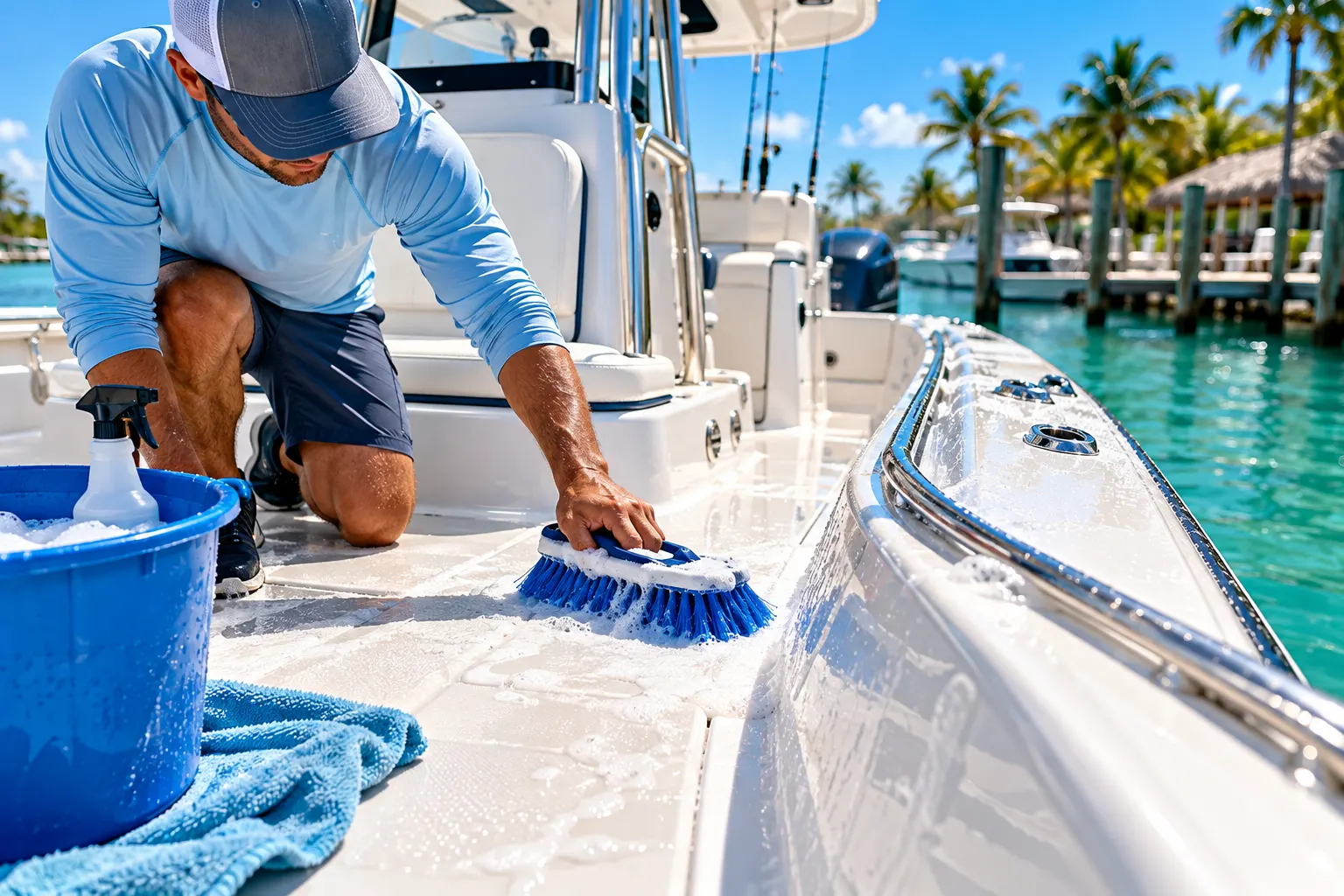
Keeping a boat clean is about more than making it look good. Regular cleaning helps remove salt, dirt, algae, fish residue, sunscreen, and other buildup that can affect different parts of the boat over time. How To Clean A Boat is a simple process when you use the right supplies and follow a regular routine. A clean boat is also more pleasant to use, especially when you spend long days on the water with family or friends.
The cleaning process does not have to be complicated. With the right supplies and a simple routine, you can keep the deck, seats, hull, and other surfaces looking fresh.
Whether you have a fishing boat, center console, pontoon, or another type of recreational boat, the basic cleaning process is similar. The key is to use products and methods that are appropriate for each surface.
Key Takeaways
- Regular boat cleaning helps remove salt, dirt, algae, fish residue, and other buildup from different surfaces.
- Rinsing a boat with fresh water after saltwater use can help reduce salt residue and buildup.
- Different boat surfaces require different cleaning products and tools to avoid scratches or damage.
- Cleaning fishing areas quickly can help prevent stains, odors, and difficult-to-remove residue.
- Drying the boat properly after cleaning helps prevent moisture from remaining in seats, storage areas, and enclosed spaces.
Why Should You Clean Your Boat Regularly?
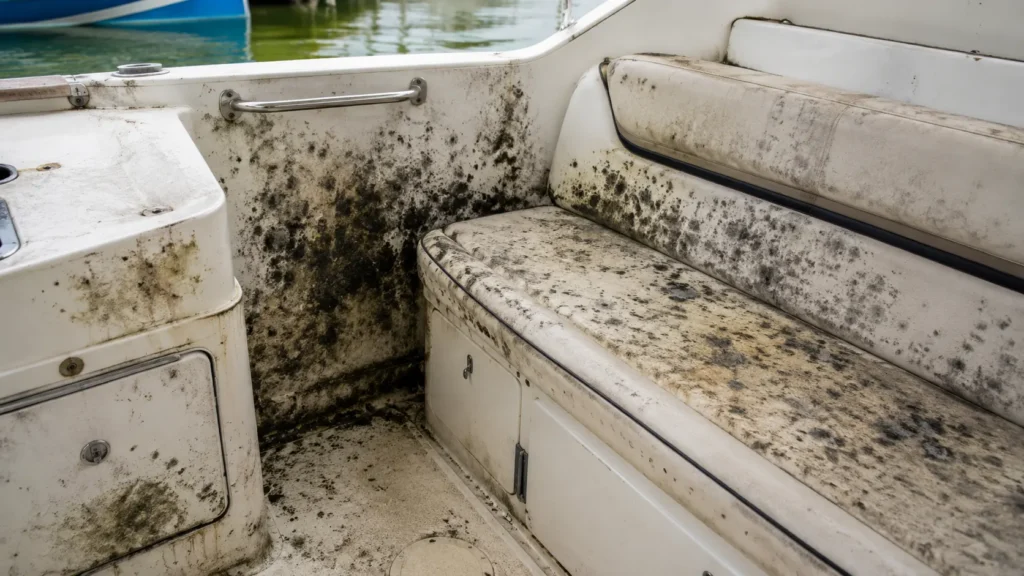
Boats are constantly exposed to water, sunlight, dirt, and changing weather conditions. Saltwater can leave deposits on surfaces, while freshwater can still leave dirt, algae, and other residue.
If this buildup is left for too long, it can become harder to remove. Fish blood, bait, food, and drinks can also leave stains and unpleasant smells.
Regular cleaning makes it easier to maintain the boat because you are dealing with small amounts of dirt rather than allowing everything to build up.
Cleaning also gives you a chance to notice problems such as damaged upholstery, loose fittings, stains, corrosion, or cracks before they become bigger concerns.
What Do You Need to Clean a Boat?
You do not need a large collection of specialized products for routine cleaning.
Basic supplies can include:
- Fresh water
- Marine-safe boat soap
- Soft-bristle brush
- Microfiber towels
- Soft sponge
- Bucket
- Hose
- Non-abrasive cleaner
- Glass cleaner suitable for marine windows
- Vinyl cleaner for appropriate upholstery
- Protective gloves
The exact supplies depend on the materials used on your boat.
Before using any cleaning product, check the manufacturer’s instructions and make sure it is suitable for the surface you are cleaning.
Step-by-Step Guide to Cleaning Your Boat
Step 1: Remove Everything From the Boat
Start by removing loose items from the boat.
Take out fishing equipment, coolers, life jackets, food containers, towels, toys, and other belongings.
Removing these items gives you access to the entire deck and makes cleaning easier.
It is also a good time to throw away trash and dispose of old bait or food properly.
Once the boat is empty, you can see which areas need the most attention.
Step 2: Rinse the Boat With Fresh Water
Give the boat a thorough rinse before applying soap.
Fresh water helps remove loose dirt, sand, salt, and other particles from the surface.
If you use the boat in saltwater, rinsing after each trip is particularly useful because salt can remain on railings, seats, hardware, and other surfaces after the water evaporates.
Start at the top and work downward so that dirty water does not run over areas you have already cleaned.
A hose with moderate water pressure is usually enough for routine cleaning.

Avoid using excessive pressure around electrical connections, seals, fittings, and other sensitive areas.
Step 3: Clean the Deck
The deck can collect dirt, sand, fish residue, sunscreen, food, and other debris.
Apply a marine-safe cleaner according to its instructions. Use a soft or medium brush that is suitable for your deck material.
Work in small sections rather than trying to clean the entire deck at once.
Scrub gently and pay attention to corners, around seats, under equipment, and other areas where dirt tends to collect.
Rinse each section thoroughly before moving to the next one.
For textured or non-skid surfaces, a suitable brush can help remove dirt from the small grooves.
Step 4: Clean the Boat Seats and Upholstery
Boat seats need careful cleaning because marine upholstery can be exposed to sunlight, salt, sunscreen, sweat, and moisture.
Start by rinsing the seats with fresh water.
Use a cleaner designed for the specific upholstery material and apply it with a soft cloth or sponge.
Do not use harsh household chemicals unless the upholstery manufacturer specifically recommends them.
Pay attention to seams and areas where dirt collects.
After cleaning, rinse away any remaining product and dry the seats with a clean microfiber towel.
Allow the upholstery to dry properly rather than covering wet seats for long periods.
Step 5: Clean the Hull

The hull can collect algae, waterline stains, dirt, and mineral deposits.
The cleaning method depends on whether the boat is in the water or out of the water.
For routine cleaning, rinse the hull with fresh water and use an appropriate marine cleaner.
If you notice stubborn waterline stains or heavy buildup, you may need a specialized hull cleaner. Follow the product instructions carefully and avoid using products that could damage the finish.
If the hull has a painted or specialized finish, use products recommended for that specific surface.
Step 6: Clean the Windshield and Windows
Boat windshields and windows can collect salt spray, dust, fingerprints, and water spots.
Start by rinsing them with clean water. This helps remove particles that could scratch the surface during wiping.
Use a marine-safe glass or acrylic cleaner depending on the material.
Some boat windows are made from acrylic or polycarbonate rather than traditional glass. These materials can scratch easily, so avoid abrasive cloths, rough sponges, and household cleaners that are not recommended for them.
Use a soft microfiber cloth and wipe gently.
Step 7: Clean the Fishing Area
If you use your boat for fishing, the fishing area may need additional attention.
Fish blood, bait, scales, and slime can create strong odors and stains if they are left on the deck.
Clean these areas as soon as possible after fishing.
Rinse away loose material and use a suitable marine cleaner. Pay attention to fish boxes, cutting surfaces, rod holders, and other areas that come into contact with bait or fish.
Make sure fish boxes and storage areas are thoroughly rinsed and allowed to dry.
Step 8: Clean the Hardware and Railings
Railings, cleats, metal fittings, and other hardware are exposed to water and weather.
Rinse them with fresh water and wipe them down with a soft cloth.
Salt residue can collect around fittings and hardware, especially on boats used in saltwater.
Avoid aggressive scrubbing that could scratch polished or finished surfaces.
If you notice corrosion, deal with it according to the manufacturer’s recommendations rather than simply covering it with cleaner.
Step 9: Clean the Interior and Storage Areas
Do not forget the areas that are less visible.
Open storage compartments and remove dirt, sand, wrappers, and other debris.
Wipe down the inside of compartments with an appropriate cleaner and allow them to dry.
If the boat has a cabin, clean tables, counters, floors, cushions, and other surfaces based on their individual materials.
Keeping storage areas clean and dry can also help reduce unpleasant smells.
Step 10: Rinse and Dry Everything
After cleaning, give the boat another thorough rinse.
Make sure there is no leftover soap or cleaning product on the surfaces.
Use microfiber towels to dry areas where water tends to collect.
Allow seats, compartments, and other areas to dry properly.
Good ventilation is especially useful for boats with enclosed spaces.
How Often Should You Clean a Boat?
The frequency depends on how often you use the boat and where you use it.
If you use your boat in saltwater regularly, rinsing it with fresh water after each trip is a good habit.
A more thorough cleaning can be done regularly based on how much dirt and residue accumulates.
Boats that are used less frequently may not need full cleaning after every outing, but they should still be inspected and cleaned before storage.
The important thing is consistency. Small cleaning jobs are generally easier than dealing with months of accumulated dirt and stains.
What Should You Avoid When Cleaning a Boat?
Some common household cleaning products can be too harsh for marine surfaces. Avoid abrasive materials that can scratch fiberglass, acrylic, vinyl, or other finishes.
Do not use strong chemicals without checking whether they are suitable for the surface. Avoid directing high-pressure water at electrical components, seals, gauges, or sensitive fittings.
You should also avoid allowing cleaning products to dry on the surface unless the instructions specifically say that it is safe.
Tips for Keeping Your Boat Cleaner
A few simple habits can reduce the amount of cleaning required.
- Rinse the boat after using it in saltwater.
- Clean fish residue immediately after fishing.
- Encourage passengers to remove sandy or muddy shoes before getting on board.
- Keep a small cleaning kit on the boat for quick cleanups.
- Dry wet areas when possible.
- Clean spills as soon as they happen.
- Check storage compartments regularly.
These small steps can make your regular cleaning routine much easier.
FAQs About How To Clean A Boat
Can you clean a boat while it is still in the water?
Yes, some basic cleaning can be done while the boat is in the water. However, access to the hull and certain areas may be limited, and cleaning products should be used responsibly to avoid releasing unsuitable chemicals into the water.
What is the best water temperature for cleaning a boat?
Cool or lukewarm water is generally suitable for routine boat cleaning. Extremely hot water is not necessary and may not be appropriate for some surfaces or materials.
Can you use dish soap to clean a boat?
It is better to use a cleaner specifically designed for boats or the particular surface being cleaned. Some household dish soaps may remove protective coatings or leave residue.
How do you remove bird droppings from a boat?
Rinse the area with fresh water and allow the residue to soften before gently cleaning it with a suitable marine-safe cleaner and soft cloth or sponge.
How do you remove sunscreen stains from boat seats?
Clean sunscreen residue as soon as possible using a cleaner recommended for the specific upholstery material. Avoid harsh chemicals that could damage or discolor the surface.
How do you remove mildew smell from a boat?
Start by identifying and cleaning areas where moisture is collecting. Wash affected surfaces with an appropriate marine cleaner and allow cushions, compartments, and other areas to dry thoroughly.
Should you wax a boat after cleaning it?
Waxing may help protect certain boat finishes and improve their appearance, but the appropriate product depends on the hull material and existing finish. Always follow the manufacturer’s recommendations.
How do you clean a boat after a fishing trip?
Remove bait, fish residue, scales, and trash as soon as possible. Rinse the fishing area with fresh water, clean it with a suitable marine product, and allow the area to dry completely.
Can pressure washing damage a boat?
Yes. Excessive pressure can damage certain finishes, seals, decals, upholstery, electrical components, or other sensitive areas. If using a pressure washer, follow the boat and equipment manufacturer’s recommendations.
How do you keep a boat smelling fresh?
Regularly remove food, bait, trash, and wet materials. Clean storage areas and upholstery, rinse fishing equipment, and allow enclosed spaces to ventilate and dry properly.
Conclusion
Learning how to clean a boat does not require complicated equipment or hours of work every time you return from the water. A simple routine of removing loose items, rinsing surfaces, cleaning the deck and upholstery, washing the hull, and drying the boat can make a noticeable difference.
The most important thing is to use the right cleaning method for each surface. Marine upholstery, glass, fiberglass, metal hardware, and deck materials may all require different products and levels of care.
Regular cleaning also gives you an opportunity to inspect your boat and spot signs of wear, corrosion, stains, or damage.
Whether you take your boat fishing, cruising, snorkeling, or simply spend time on the water with family and friends, keeping it clean can help protect its appearance and make every trip more enjoyable.