
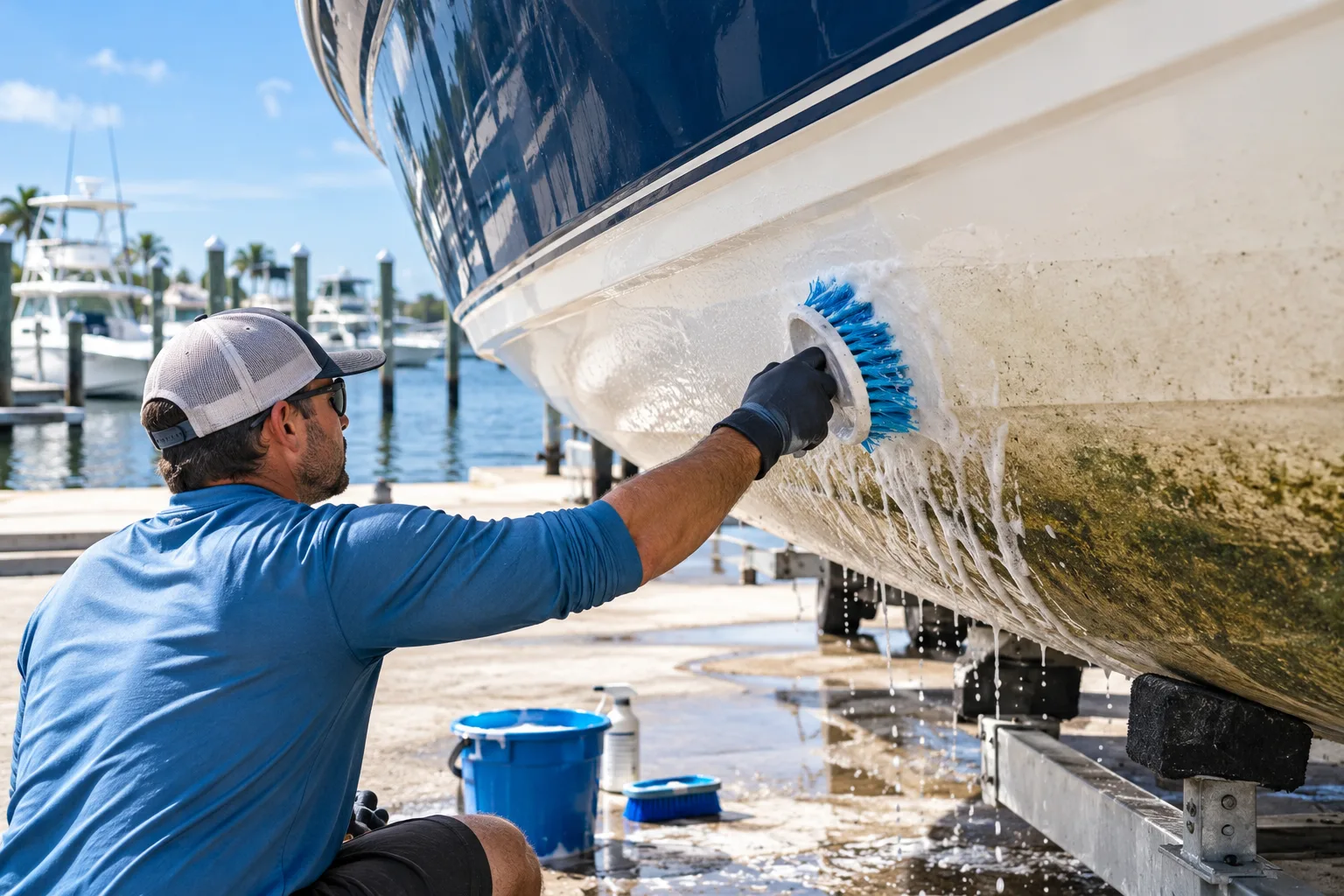
Keeping your boat clean is important for both its appearance and performance. The hull is constantly exposed to saltwater, algae, dirt, marine growth, stains, and other debris. Over time, these contaminants can build up and become harder to remove.
If you are wondering how to clean the hull of a boat, the process is fairly simple when you use the right tools and cleaning methods. Regular cleaning can help maintain the finish, reduce buildup, and make it easier to spot damage or problems on the hull.
This guide explains how to clean the hull of a boat, what supplies you need, how to remove common stains, and how often you should clean it.
Key Takeaways
- Regular hull cleaning helps prevent dirt, salt, algae, and marine growth from building up.
- Use marine-safe cleaners and soft brushes that are suitable for your boat’s hull material.
- Cleaning the hull after saltwater use can help reduce salt deposits and waterline stains.
- Avoid excessive pressure or abrasive tools that can damage the hull’s finish or protective coatings.
- Cleaning is also a good opportunity to inspect the hull for cracks, scratches, blisters, and other maintenance issues.
Why Is It Important to Clean a Boat Hull?
The hull is one of the most exposed parts of a boat. When the boat is in the water, the hull can collect algae, slime, dirt, salt deposits, and other marine growth.
A dirty hull can also affect how the boat looks and may make routine maintenance more difficult. Heavy buildup below the waterline can create additional drag through the water.
Regular cleaning helps remove these contaminants before they become difficult to deal with. It also gives you an opportunity to inspect the hull for scratches, cracks, blisters, corrosion, or other visible problems.
What Do You Need to Clean a Boat Hull?
Before learning how to clean the hull of a boat, gather the right supplies. The exact products you need depend on the hull material and the type of dirt or stains present.
Basic supplies include:
- Marine-safe boat hull cleaner
- Bucket
- Fresh water
- Soft-bristle brush
- Sponge or microfiber cloth
- Hose with a spray nozzle
- Protective gloves
- Safety glasses
- Long-handled brush for hard-to-reach areas
For tougher stains, you may need a specialized cleaner designed for waterline stains, mineral deposits, or marine growth.
Always check that the cleaner is suitable for your boat’s hull material and follow the product instructions.
How to Clean the Hull of a Boat Step by Step

1. Choose the Right Location
Start by choosing a suitable location for cleaning your boat. If possible, clean the hull on land where you can easily access the entire surface.
If the boat is in the water, you may be able to clean areas above the waterline, but cleaning the entire hull can be more difficult.
You should also consider where the wastewater will go. Avoid allowing large amounts of cleaning chemicals or contaminated water to enter waterways.
2. Rinse the Hull
Start with a thorough rinse using fresh water.
This removes loose dirt, salt, sand, and other debris from the surface. Rinsing first is important because scrubbing a dry, dirty surface can potentially create scratches.
Work from the top of the hull downward. This allows dirt and cleaning water to move toward the lower sections instead of spreading over areas you have already cleaned.
Pay particular attention to areas around fittings, the waterline, trim, and other places where dirt can collect.
3. Apply a Marine-Safe Cleaner
Once the loose dirt has been removed, apply an appropriate boat hull cleaner.
Use a product specifically designed for your hull material. Fiberglass, painted surfaces, aluminum, and other materials may require different cleaning approaches.
Do not automatically use household cleaners. Some household products can be too harsh for marine surfaces and may damage finishes or protective coatings.
Apply the cleaner according to the manufacturer’s instructions. Some products should be diluted with water, while others can be applied directly.
4. Scrub the Hull Gently
Use a soft-bristle brush or marine-safe sponge to scrub the hull.
Start with gentle pressure and increase it only when necessary. Concentrate on areas with visible dirt, algae, or stains.
For larger boats, divide the hull into smaller sections. Clean and rinse one section before moving to the next.
A long-handled brush can make it easier to reach areas underneath the boat without putting yourself in an unsafe position.
Avoid using abrasive materials unless the product and hull manufacturer specifically recommend them.
5. Pay Attention to the Waterline
The waterline often develops noticeable stains because it sits where water, air, sunlight, and marine debris meet.
Waterline stains can appear as brown, yellow, green, or dark marks. Some may be caused by minerals, algae, or organic material.
If normal boat soap does not remove the stains, use a dedicated waterline or stain remover that is compatible with your hull.
Let the cleaner work according to its instructions rather than scrubbing aggressively. Using the right cleaner is usually safer and more effective than applying excessive pressure.
6. Rinse Thoroughly
After scrubbing, rinse the hull completely with fresh water.
Make sure there is no cleaner left on the surface. Residue can affect the finish and may leave streaks or spots when it dries.
Again, start at the top and work downward.
Check the hull from different angles after rinsing. This can help you identify areas that still have dirt or stains.
7. Dry the Hull
Allow the hull to dry or use a clean microfiber towel to dry accessible areas.
Drying can help prevent water spots, especially if you are working with a smooth or polished surface.
This is also a good time to inspect the hull closely. Look for cracks, scratches, discoloration, loose fittings, or other changes that may require further maintenance.
How to Remove Algae and Marine Growth
Algae and marine growth can be more difficult to remove than ordinary dirt.
For light buildup, a marine-safe cleaner and soft brush may be enough. Apply the cleaner, allow it to work for the recommended amount of time, and gently scrub the affected area.
For heavy growth, avoid using excessive force or sharp tools that could damage the hull.
If the boat has been sitting in the water for an extended period, professional cleaning may be appropriate, especially when growth is extensive.
How to Remove Salt and Mineral Deposits
Salt deposits are common on boats used in saltwater.
Freshwater rinsing after each trip is one of the simplest ways to reduce salt buildup. For existing deposits, a marine-safe cleaner designed to remove mineral or salt residue can help.
Apply the cleaner as directed, gently scrub the surface, and rinse thoroughly.
Regular rinsing is much easier than allowing deposits to build up over weeks or months.
Should You Pressure Wash a Boat Hull?
Pressure washing can be useful for removing certain types of dirt and marine growth, but it should be done carefully.
High pressure can damage paint, coatings, decals, seals, and other components if used incorrectly. It can also force water into areas where it does not belong.
If you use a pressure washer, select an appropriate pressure level and keep the nozzle at a safe distance from the surface. Avoid directing high-pressure water at sensitive components.
For many routine cleaning jobs, a garden hose, soft brush, and marine-safe cleaner are sufficient.
How Often Should You Clean a Boat Hull?
How often you clean the hull depends on how frequently you use the boat and whether it stays in the water.
A boat used regularly in saltwater may benefit from rinsing with fresh water after each trip. A deeper hull cleaning can be performed as needed based on dirt and marine growth.
Boats kept in the water for long periods may require more frequent cleaning, particularly around the waterline.
Regular maintenance is generally easier than waiting until heavy buildup develops.
Tips for Keeping Your Boat Hull Clean

A few simple habits can make hull cleaning easier:
- Rinse the boat with fresh water after saltwater use.
- Clean stains before they become difficult to remove.
- Use cleaners designed for your specific hull material.
- Avoid abrasive brushes and harsh household chemicals.
- Follow the cleaner manufacturer’s instructions.
- Inspect the hull while cleaning it.
- Keep the boat properly maintained between trips.
- Use protective equipment when handling cleaning products.
FAQs
How often should I wax my boat hull?
Waxing is generally done periodically based on the boat’s exposure, use, and condition. A clean, properly waxed surface can help protect the finish and make future cleaning easier.
Can I clean my boat hull while it is in the water?
Some hull cleaning can be done while the boat is in the water, especially around accessible areas. However, cleaning the entire hull is usually easier and safer when the boat is properly hauled out.
What is the best way to clean a boat hull before waxing?
Wash the hull thoroughly with a suitable marine cleaner, remove stains and buildup, rinse it completely, and allow the surface to dry before applying wax or polish.
How do I remove oxidation from a fiberglass boat hull?
Light oxidation may be treated with an appropriate marine polishing or oxidation-removal product. Heavier oxidation may require more extensive restoration and professional attention.
Does a boat need bottom paint after hull cleaning?
Bottom paint may be appropriate for boats that remain in the water for extended periods, depending on the hull, location, and type of use. Cleaning alone does not replace a suitable antifouling system where one is needed.
Can vinegar be used to clean a boat hull?
Vinegar can help with some mineral or salt deposits, but compatibility depends on the hull material and surface finish. Test any cleaning method on a small area first.
How can I prevent stains from returning after cleaning?
Regular freshwater rinsing, prompt removal of new stains, proper storage, and maintaining the hull’s protective finish can help reduce recurring buildup.
Should I clean the hull before storing my boat?
Yes. Cleaning the hull before storage removes salt, dirt, algae, and other contaminants that could become harder to remove during long-term storage.
Can hull cleaning reveal boat damage?
Yes. Once dirt and marine growth are removed, scratches, cracks, blisters, corrosion, or other surface problems may become easier to see during inspection.
Is professional hull cleaning worth it?
Professional cleaning can be useful when the hull has heavy marine growth, difficult stains, extensive oxidation, or areas that are difficult to access safely.
Conclusion
Knowing how to clean the hull of a boat can help you keep your vessel looking better and make regular maintenance easier. Start by rinsing away loose dirt, use a marine-safe cleaner, gently scrub the surface, and rinse thoroughly.
Pay extra attention to the waterline, salt deposits, algae, and other marine growth. Most importantly, choose cleaning products and tools that are appropriate for your hull material.
Regular cleaning does not need to be complicated. A little maintenance after each trip can prevent dirt and salt from becoming difficult to build up and can help you notice potential hull problems before they become bigger maintenance concerns.