
A boat hull is one of the most important parts of any boat. It forms the main body of the vessel and allows it to float, move through the water, and carry people or cargo safely. Whether you own a fishing boat, a sailboat, a kayak, or a large yacht, the hull plays a major role in how the boat performs.
The shape, material, and condition of a boat hull affect speed, fuel efficiency, stability, and safety. A well-designed hull helps the boat handle rough water, while a damaged hull can make boating dangerous.
In this guide, you’ll learn what a boat hull is, the different types of hulls, the materials used to build them, and how to keep your hull in excellent condition.
What Is a Boat Hull?
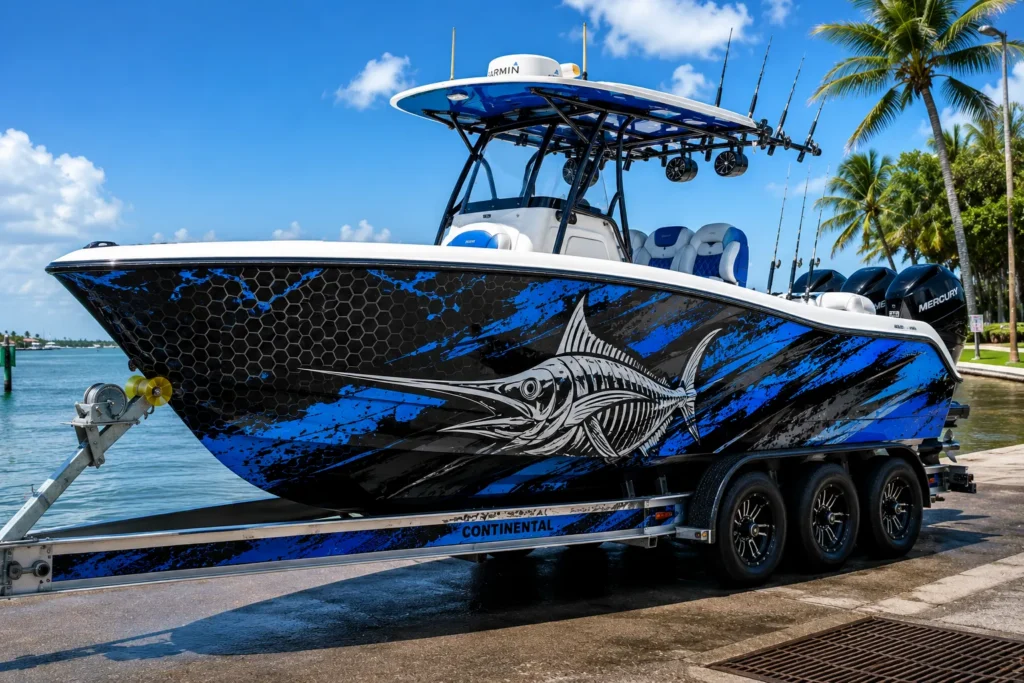
A boat hull is the watertight body of a boat that sits in the water. It is the part that supports the weight of the boat and everything inside it, including passengers, equipment, and cargo.
The hull keeps the boat afloat by displacing water. As long as the hull remains strong and watertight, the boat can safely travel across lakes, rivers, bays, and oceans.
Every boat has a hull, but not every hull is the same. Different boats use different hull designs depending on their purpose.
For example:
- Fishing boats often have stable hulls.
- Speed boats use hulls designed for high performance.
- Sailboats have hulls built for efficiency and balance.
- Pontoon boats use floating tubes instead of a traditional hull.
Choosing the right hull design depends on where and how the boat will be used.
Also Read:
- Boat Docking Guide
- Common Boat Repair Issues
- Boat Wrapping Price Guide
- Boat Insurance Cost
- How to charge a boat battery
Why Is the Boat Hull Important?
The hull is much more than the bottom of the boat. It affects nearly every part of the boating experience.
A good hull helps provide:
Stability
The hull keeps the boat balanced on the water. A stable hull reduces rocking and makes passengers feel more comfortable.
Speed
Some hull designs reduce water resistance, allowing boats to travel faster with less engine power.
Fuel Efficiency
A properly designed hull moves smoothly through the water, helping reduce fuel consumption.
Safety
A strong hull protects passengers from water entering the boat and helps the vessel remain stable in different weather conditions.
Comfort
The right hull design creates a smoother ride by reducing the impact of waves.
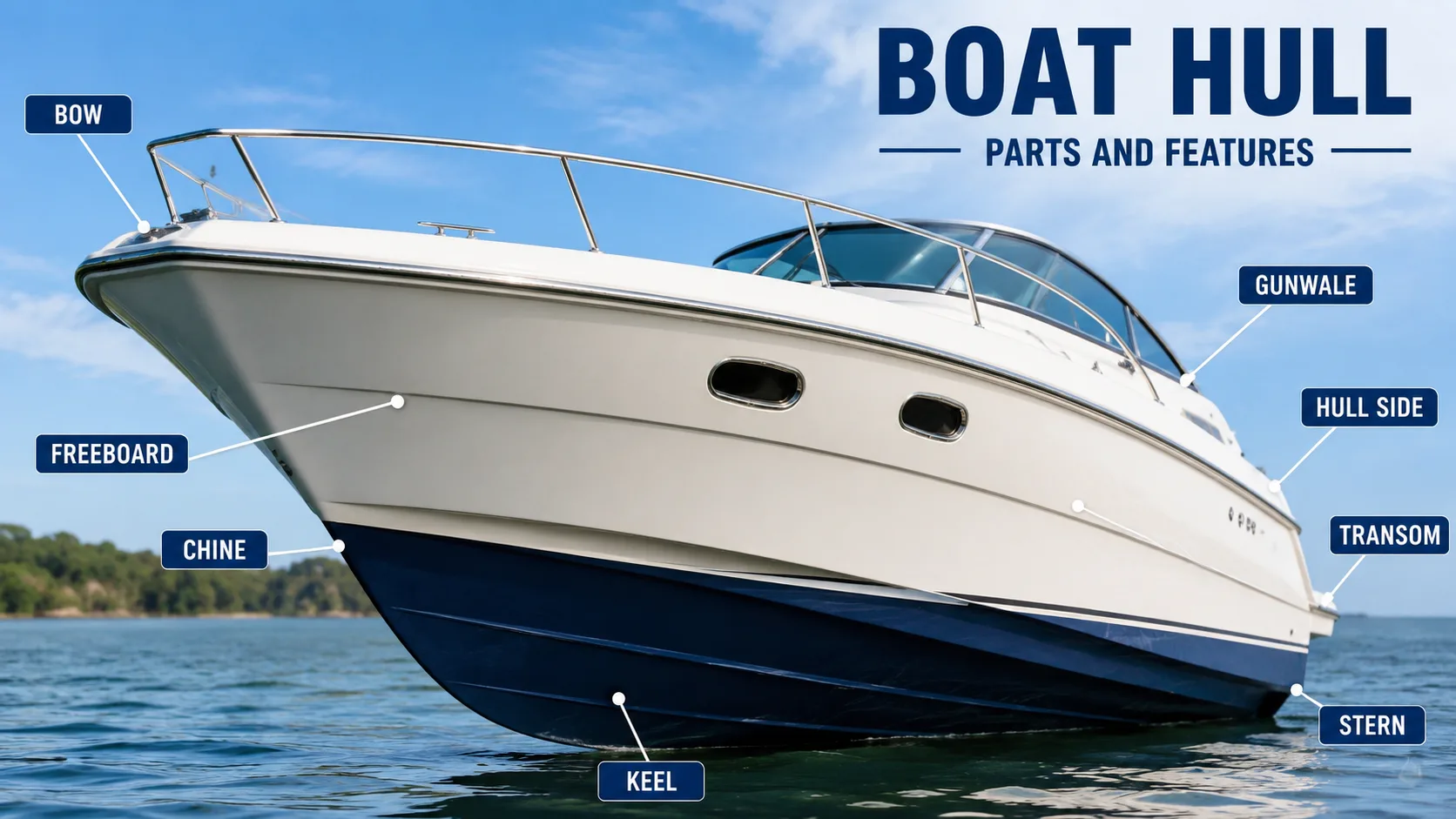
Main Parts of a Boat Hull
Understanding the basic parts of a hull makes it easier to understand how boats work.
Bow
The bow is the front of the boat.
It is designed to cut through the water efficiently.
Stern
The stern is the rear section of the boat.
Many boats have engines, swim platforms, or ladders attached to the stern.
Keel
The keel runs along the center of the bottom of the hull.
It provides balance and helps the boat travel in a straight line.
On sailboats, the keel also helps prevent tipping.
Chine
The chine is the area where the side of the hull meets the bottom.
Some boats have sharp chines while others have rounded ones.
The chine affects how the boat handles waves and turns.
Transom
The transom is the flat section at the back of many boats.
Outboard motors are often mounted here.
Freeboard
Freeboard is the distance between the waterline and the upper edge of the boat.
Higher freeboard usually provides more protection from waves.
Types of Boat Hulls
Boat hulls are designed for different water conditions and boating activities.
Displacement Hull
A displacement hull moves through the water rather than riding on top of it.
These hulls are commonly found on:
- Large ships
- Trawlers
- Sailboats
- Cruising boats
Advantages include:
- Excellent fuel efficiency at lower speeds
- Smooth ride
- Good performance in rough water
The main disadvantage is that displacement hulls are generally slower than other designs.
Planing Hull
A planing hull rises and skims across the surface of the water as speed increases.
This design is common on:
- Speed boats
- Bass boats
- Recreational boats
- Many fishing boats
Advantages include:
- Higher speeds
- Better acceleration
- Great performance in calm water
However, planing hulls may provide a rougher ride in heavy waves.
Semi-Displacement Hull
A semi-displacement hull combines features of both displacement and planing hulls.
These boats can travel efficiently at moderate speeds while still offering a comfortable ride.
Many cruising boats use this design because it provides a balance between speed and fuel economy.
Hull Shapes
Besides the overall hull type, the bottom shape also affects performance.
Flat Bottom Hull
Flat bottom boats have nearly flat undersides.
They are ideal for calm lakes, rivers, and shallow water.
Advantages include:
- Excellent stability
- Easy to launch
- Suitable for fishing
They are not ideal for rough offshore conditions because waves can create a harder ride.
Round Bottom Hull
Round hulls move smoothly through the water and are very efficient.
They are commonly used on sailboats and larger vessels.
Although they offer excellent fuel economy, they are less stable when standing still.
V-Shaped Hull
A V-shaped hull has a pointed bottom that cuts through waves.
This is one of the most popular hull designs.
Benefits include:
- Better handling in rough water
- Softer ride
- Improved control at higher speeds
Many offshore fishing boats use deep V hulls because they perform well in changing sea conditions.
Multi-Hull Boats
Some boats use more than one hull.
Examples include:
- Catamarans
- Trimarans
These boats offer:
- Excellent stability
- More deck space
- Better fuel efficiency in many situations
Catamarans have become increasingly popular for both recreational boating and fishing because of their smooth ride.
Materials Used to Build Boat Hulls
Boat hulls are made from different materials, each with its own strengths and weaknesses. The right material depends on the type of boat, how it will be used, and the owner’s budget.
Fiberglass
Fiberglass is one of the most common materials used in modern boats.
It is popular because it is:
- Lightweight
- Strong
- Resistant to rust
- Easy to maintain
- Affordable
Fiberglass hulls can last for many years if they are properly cared for.
Also Read: How To Paint A Fiberglass boat?
Aluminum
Aluminum is another popular choice, especially for fishing boats and small recreational boats.
Its advantages include:
- Lightweight
- Durable
- Rust resistant
- Easy to transport
Aluminum boats are often used in freshwater and shallow water.
Steel
Steel hulls are mainly found on larger commercial vessels and some long-distance cruising boats.
Steel offers:
- Excellent strength
- Long lifespan
- High durability
However, it requires regular maintenance to prevent rust.
Wood
Wooden boats have been used for centuries and are still appreciated for their classic appearance.
Wood provides a beautiful finish but requires regular maintenance to prevent rot, cracking, and water damage.
Composite Materials
Many newer boats use advanced composite materials that combine strength with reduced weight.
These materials improve performance while requiring less maintenance than traditional materials.
How Hull Design Affects Performance
The design of a boat hull has a major impact on how the boat performs on the water.
Handling
A well-designed hull allows the boat to turn smoothly and stay balanced, even when conditions change.
Fuel Economy
Hull shapes that create less drag move more efficiently through the water, reducing fuel consumption.
Speed
Some hulls are built for maximum speed, while others are designed for steady cruising.
The hull design determines how quickly the boat accelerates and how efficiently it travels.
Comfort
Certain hull shapes absorb wave impacts better than others, creating a smoother ride for passengers.
Load Capacity
Some hulls are designed to carry heavy loads without losing stability.
This is especially important for work boats and larger recreational vessels.
Common Boat Hull Problems
Even well-built hulls can develop problems over time.
Knowing what to watch for helps prevent expensive repairs.
Scratches
Small scratches are common after docking or launching.
Although they may seem minor, deep scratches should be repaired to prevent further damage.
Cracks
Cracks can appear after collisions or years of use.
Ignoring cracks may allow water to enter the hull and weaken the structure.
Blisters
Fiberglass boats sometimes develop small blisters beneath the surface.
These occur when moisture becomes trapped under the outer coating.
Small blisters are usually manageable, but larger ones should be inspected by a professional.
Corrosion
Metal hulls can develop corrosion if they are not properly protected.
Regular inspections help catch corrosion early.
Dents
Aluminum hulls may develop dents after striking rocks or other hard objects.
While small dents may not affect performance, larger ones should be repaired.
How to Maintain a Boat Hull
Proper maintenance helps extend the life of your boat and improves safety on the water.
Wash the Hull After Every Trip
Salt, dirt, and algae can build up quickly.
Rinse the hull thoroughly with fresh water after every outing.
Remove Marine Growth
Barnacles, algae, and other marine organisms increase drag and reduce fuel efficiency.
Clean the hull regularly to prevent buildup.
Inspect for Damage
Look over the hull before and after each trip.
Pay attention to:
- Cracks
- Chips
- Loose fittings
- Deep scratches
- Signs of leaks
Finding problems early usually makes repairs easier and less expensive.
Apply Wax
Wax protects fiberglass hulls from sunlight and oxidation.
It also makes cleaning easier because dirt does not stick as easily.
Check the Bottom Paint
Boats that remain in the water for long periods often have protective bottom paint.
Inspect this coating regularly and repaint it when needed.
How to Protect Your Boat Hull
Preventive care can reduce repair costs and keep your boat looking its best.
Some helpful tips include:
- Store the boat on a trailer or lift when possible.
- Use a quality boat cover.
- Avoid running into shallow water.
- Slow down near rocks and docks.
- Avoid dragging the boat across rough surfaces.
- Repair damage as soon as you notice it.
These simple habits can greatly increase the life of your hull.
Signs Your Boat Hull Needs Repair
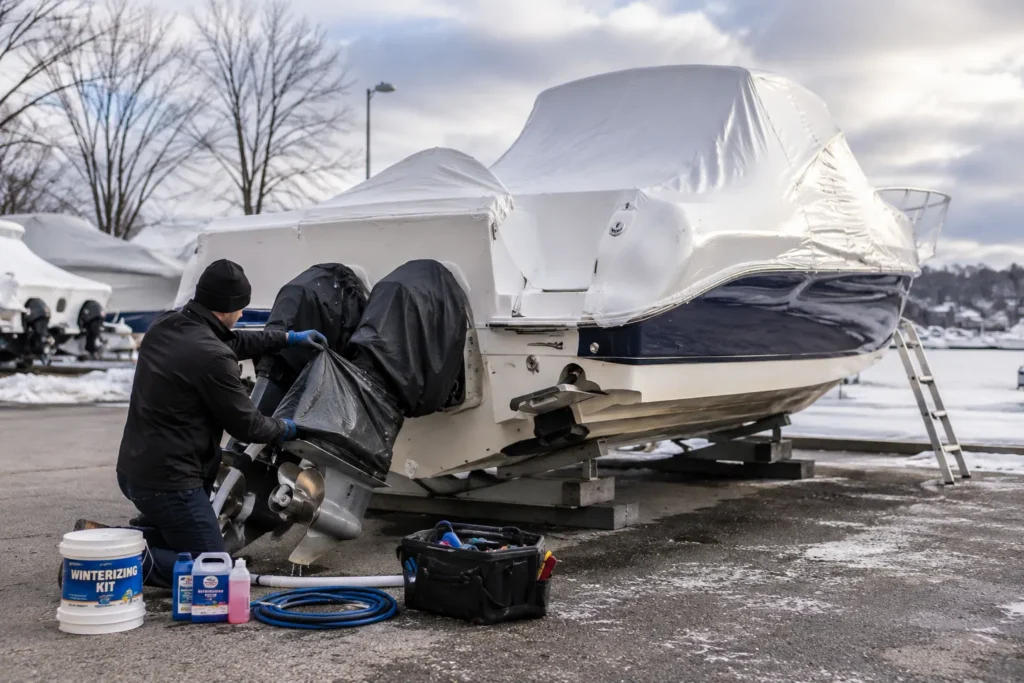
Some problems require immediate attention.
Watch for these warning signs:
- Water leaking into the boat
- Large cracks
- Soft spots in fiberglass
- Loose fittings
- Rust spreading across metal surfaces
- Severe dents
- Poor handling on the water
- Unusual vibrations (Why is my boat vibrating?)
If you notice any of these issues, have the hull inspected before using the boat again.
How to Choose the Right Boat Hull
There is no single hull that works for every boater. When choosing a boat, consider where you will spend most of your time on the water.
- If you mostly use calm lakes or rivers, a flat-bottom hull may work well.
- If you regularly boat in rough water, a deep V hull may provide a smoother ride.
- If stability is your top priority, a multi-hull design may be worth considering.
Also think about:
- Your boating experience
- Typical weather conditions
- Number of passengers
- Storage needs
- Fuel costs
- Maintenance requirements
Choosing the right hull helps you enjoy a safer and more comfortable boating experience.
Boat Hull Safety Tips
Taking care of your hull is also an important part of boating safety.
- Always inspect the hull before launching your boat.
- Avoid overloading the boat beyond its recommended capacity.
- Keep an eye out for floating debris, rocks, and shallow water that could damage the hull.
- Schedule regular maintenance and repairs instead of waiting until small problems become serious.
A well-maintained hull provides better stability, improved fuel efficiency, and greater peace of mind while on the water.
FAQs About Boat Hull
How long does a boat hull typically last?
The lifespan of a boat hull depends on its material, maintenance, and usage. With proper care, many boat hulls can last for several decades.
Can a damaged boat hull be repaired?
Yes, most hull damage, including cracks, dents, and scratches, can be repaired. The repair method depends on the hull material and the extent of the damage.
Does hull color affect boat performance?
No, the color of the hull does not affect performance. However, darker colors may show fading and scratches more easily than lighter colors.
How often should I inspect my boat hull?
It’s a good idea to inspect your hull before and after every boating trip and perform a more detailed inspection at least once or twice a year.
What causes a boat hull to lose its shine?
Exposure to sunlight, saltwater, dirt, and oxidation can dull the surface of a boat hull over time. Regular washing and waxing help restore and protect its finish.
Can a boat hull become heavier over time?
Yes. Water absorption, marine growth, and added equipment can increase a boat’s weight, which may affect its performance and fuel efficiency.
Is it safe to paint a boat hull yourself?
Yes, many boat owners paint their hulls themselves. Using marine-grade paint and following the manufacturer’s instructions will help achieve the best results.
How can I tell if my boat hull is taking on water?
Signs include water collecting in the bilge more quickly than usual, reduced performance, unusual handling, or visible leaks around the hull.
Does storing a boat out of the water help protect the hull?
Yes. Keeping a boat on a trailer, lift, or dry storage can reduce marine growth, minimize corrosion, and extend the life of the hull.
Can changing the hull affect a boat’s value?
Yes. A well-maintained hull can increase a boat’s resale value, while significant damage or poor repairs may reduce its value.
Conclusion
The boat hull is the foundation of every boat. It determines how the vessel floats, handles waves, carries weight, and performs on the water. Understanding the different hull types, materials, and designs can help you choose the right boat for your needs and take better care of it over time.
Regular cleaning, inspections, and timely repairs can extend the life of your hull while improving safety and performance. Whether you use your boat for fishing, cruising, water sports, or leisure, maintaining the hull is one of the best ways to protect your investment and enjoy many years of reliable boating.