
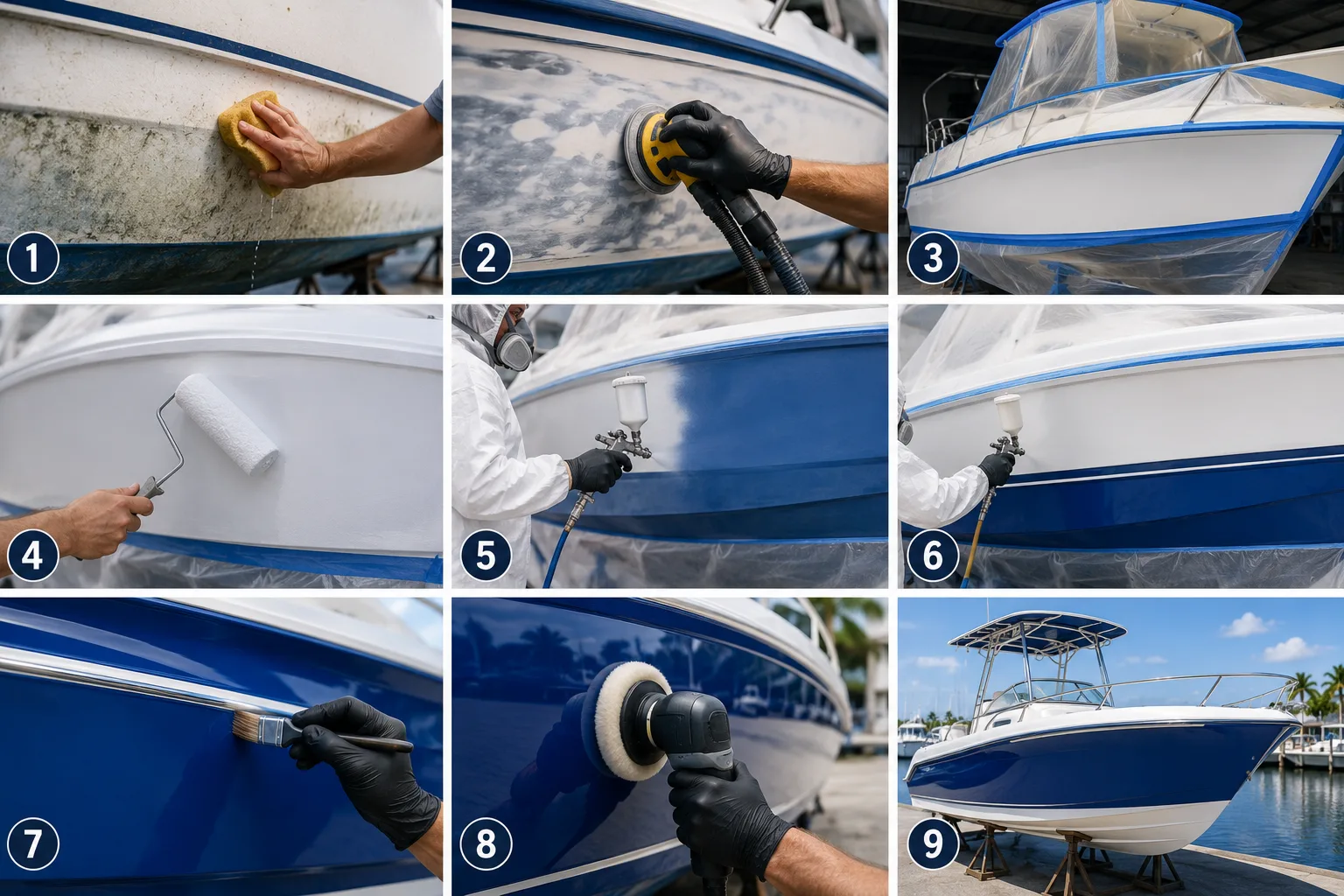
If you want to learn how to paint a fiberglass boat, it is important to know that painting does more than improve the look of your boat. It also helps protect it from damage. Over time, the original paint can fade, crack, or peel because of sunlight, saltwater, and regular use. A fresh coat of paint helps protect the fiberglass and keeps the boat looking clean and well maintained.
Fiberglass boats are strong, but they still need proper care. A good paint job can help prevent water damage, corrosion, algae growth, and barnacle buildup. It also keeps the surface smooth, which can help the boat move better through the water. Learning how to paint a fiberglass boat the right way can help extend the life of your boat and maintain its value for years to come.
Gathering the Right Tools and Materials
Before you start painting your fiberglass boat, having the right supplies makes all the difference. The right tools and materials help you get a smooth, long-lasting finish. If you use the wrong paint or skip important steps, the paint might peel, chip, or look uneven. Here’s what you’ll need to do the job right.
Types of Paint for Fiberglass Boats (Marine-Grade Options)
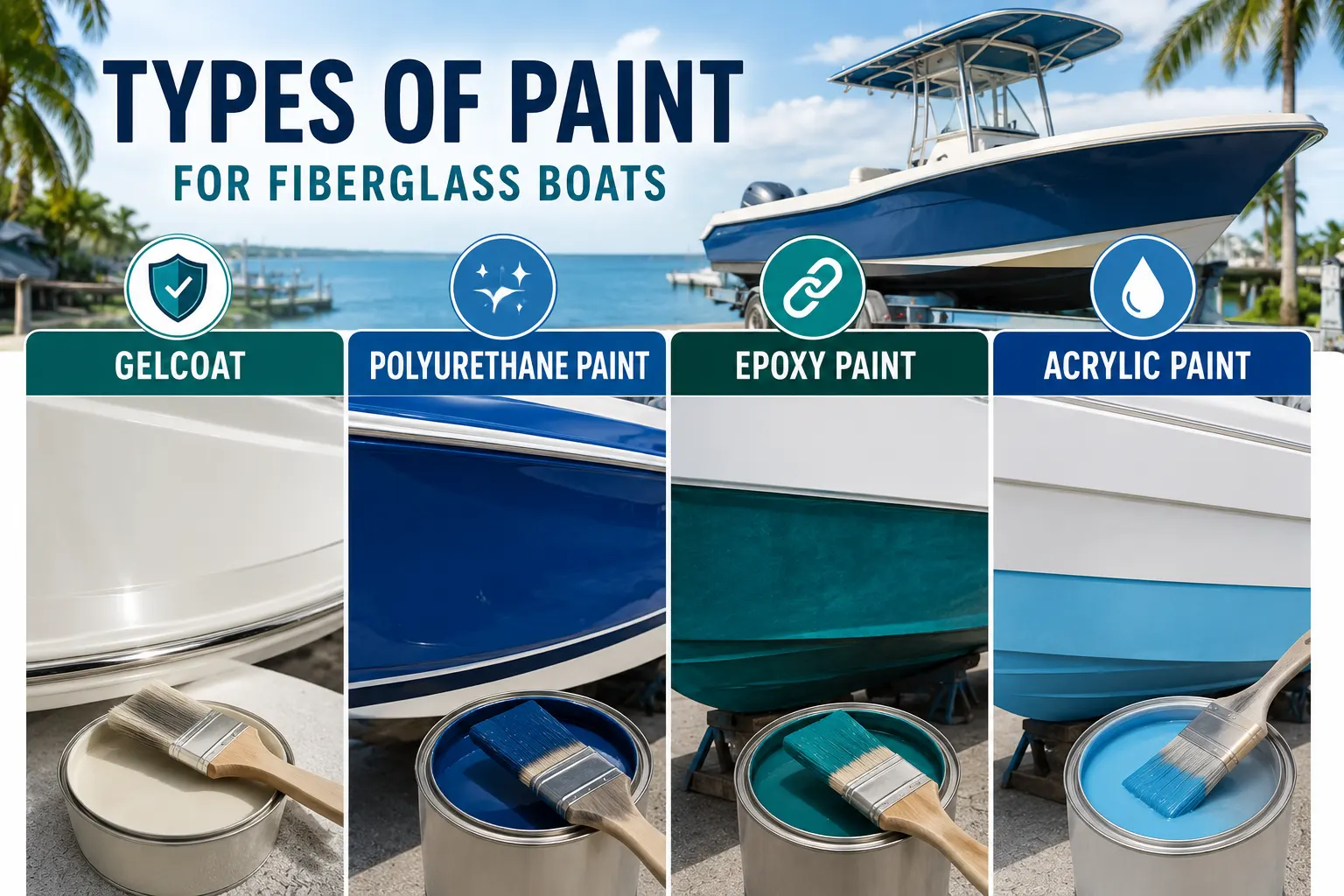
Not all paint sticks to fiberglass, so choosing the right one is important. Marine-grade paints are made to handle water, sun, and tough weather. Here are the most common types:
- Gelcoat – This is the original finish on most fiberglass boats. It’s strong and long-lasting but needs special application methods.
- Polyurethane Paint – A great choice for a shiny, professional look. It lasts a long time and resists sun damage.
- Epoxy Paint – Extremely durable, especially below the waterline, but it usually needs a topcoat to protect it from UV rays.
- Acrylic Paint – Easy to apply and maintain but doesn’t last as long as polyurethane or epoxy.
Each type has pros and cons, so think about where you’ll use your boat and how much upkeep you’re willing to do.
Primers and Sealants for Durability
A good primer helps the paint stick and creates a smooth surface. Some options include:
- Epoxy Primer – Seals fiberglass and prevents water absorption.
- High-Build Primer – Smooths out imperfections for an even finish.
- Etching Primer – Helps paint stick to tricky surfaces like fiberglass.
Once the paint is on, a sealant or topcoat protects it from fading, chipping, and water damage. A clear coat or marine wax can add extra protection.
Essential Tools (Brush, Roller, or Spray Gun)
The right tools help you get the best results. Here’s what to consider:
- Brush – Good for small areas or touch-ups. A high-quality brush helps prevent streaks.
- Roller – Works well for large sections, giving even coverage with fewer drips.
- Spray Gun – Provides a smooth, professional finish but requires experience and the right equipment.
If you’re new to painting, using a roller for big areas and a brush for edges is a simple way to get great results without needing a spray gun.
Safety Gear and Precautions
Painting a fiberglass boat involves chemicals and fine dust, so safety is important. Here’s what you’ll need:
- Respirator Mask – Protects you from breathing in fumes and dust.
- Gloves – Keep paint and chemicals off your skin.
- Protective Eyewear – Shields your eyes from splatters and sanding dust.
- Coveralls or Old Clothes – Keeps you clean and protects your skin.
Good airflow is also important. If you’re working indoors, open windows or use fans to keep fresh air moving.
Prepping the Boat for a Smooth Finish
If you want your boat’s new paint job to look smooth and last a long time, proper prep work is key. Skipping this step can lead to peeling, uneven coverage, or paint that won’t stick. Taking the time to clean, sand, and fix any damage will make painting easier and give you better results.
Cleaning the Surface to Remove Dirt and Grease
Boats pick up a lot of dirt, salt, and grease, especially if they’ve been in the water for a while. If you paint over a dirty surface, the paint won’t bond properly. Here’s what to do:
- Wash with soap and water to remove dirt and grime. Use a mild soap and a scrub brush, then rinse well.
- Use a Degreaser like acetone or a fiberglass-safe cleaner to get rid of grease and oil.
- Let It Dry Completely so there’s no moisture left behind before sanding or painting.
A clean surface helps the paint go on smoothly and last longer.
Sanding and Stripping Old Paint or Coatings
If your boat has old paint or a worn-out finish, sanding helps the new paint stick. Here’s how:
- Start with Medium-Grit Sandpaper (80-120 Grit) to remove old paint and smooth the surface.
- Use a Power Sander for Big Areas to make the job faster and more even. Hand-sand smaller spots.
- Remove Flaking Paint with a paint stripper made for fiberglass. Avoid harsh chemicals that could weaken the boat.
- Finish with Fine-Grit Sandpaper (220 Grit) to smooth everything out before applying primer.
- Wipe Off Dust with a tack cloth or damp rag.
Sanding and stripping the old coating gives the new paint something to grip, which helps prevent peeling and chipping later.
Repairing Cracks, Chips, or Imperfections
Before painting, check for cracks, dents, or holes. Even small flaws can stand out once the paint dries. Here’s how to fix them:
- Run Your Hand Over the Surface to feel for any rough or damaged areas.
- Fill Cracks and Chips with marine epoxy or fiberglass filler. Apply it smoothly with a putty knife.
- Let It Dry Completely by following the product’s instructions for drying time.
- Sand the Repaired Spots with fine-grit sandpaper to smooth everything out.
Once your boat is clean, sanded, and repaired, it’s ready for primer. Prepping the right way makes all the difference in getting a smooth, long-lasting paint job.
Applying Primer for Stronger Paint Adhesion
Now that your boat is clean, sanded, and repaired, it’s time to apply primer. This step helps the paint stick properly and last longer.
Why Primer Matters
Fiberglass is naturally smooth, which makes it hard for paint to stick. Primer creates a better surface for the paint to grip, helping to prevent peeling and chipping. It also fills in small imperfections, giving you a smoother finish.
Choosing the Right Primer
For fiberglass boats, you need a marine-grade primer that can handle water, sun, and everyday wear. Here are two good options:
- Epoxy primer – Tough and moisture-resistant, great for boats that stay in the water a lot.
- Polyurethane primer – Gives a smoother finish and helps keep colors from fading.
Not sure which one to use? Check the paint manufacturer’s recommendations. Some paints work best with specific primers.
How to Apply Primer Evenly
- Mix it well – Follow the instructions. Some primers need to be thinned before use.
- Apply thin coats – Use a brush, roller, or spray gun and avoid thick layers that could cause drips.
- Let it dry – Most primers need several hours before you move on to the next step.
- Lightly sand between coats – If you’re applying more than one coat, a light sanding helps the next layer stick better.
Taking your time with this step will give you a smoother, longer-lasting paint job.
Painting the Boat: Techniques for a Professional Look
Painting your fiberglass boat is an exciting step! A fresh coat of paint not only improves its appearance but also protects it from the elements. To get the best results, choose the right painting method, apply multiple coats, and avoid common mistakes.
Brush vs. Roller vs. Spray – What Works Best?
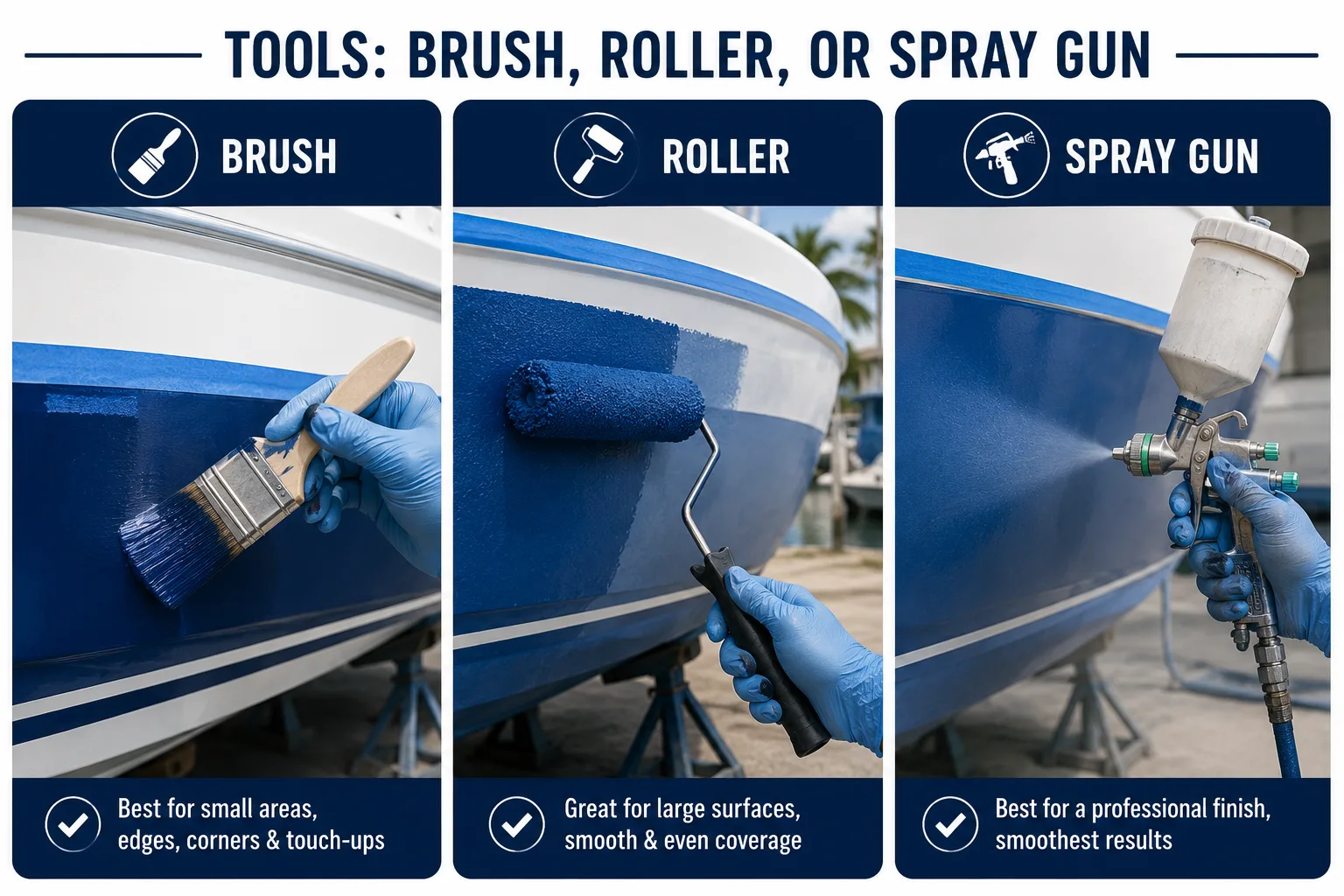
There are three main ways to apply paint, and each has its benefits:
- Brush – Best for small areas and touch-ups. It gives you good control but can leave visible brush strokes.
- Roller – Ideal for larger areas. It spreads paint evenly, though you may need to smooth out the texture with a brush (this is called “tipping off”).
Spray Gun – Creates the smoothest, most professional-looking finish but requires experience, the right equipment, and safety precautions to manage overspray.
For most boat owners, using a roller to apply paint and a brush to smooth it out is the easiest way to achieve a clean, even finish.
Layering and Drying Between Coats
Painting a fiberglass boat isn’t a one-step process. Follow these steps for a smooth, long-lasting result:
- Apply thin, even coats – Thick layers take longer to dry and can lead to drips.
- Allow each coat to dry completely – Check the manufacturer’s recommended drying times. Rushing this step can lead to an uneven finish.
- Lightly sand between coats – Use fine sandpaper (320-400 grit) to smooth out any imperfections and help the next coat stick better.
- Apply at least two to three coats – This ensures solid coverage and a durable, professional look.
Avoiding Streaks, Drips, and Bubbles
It’s frustrating to finish painting and notice flaws. Here’s how to prevent them:
- Paint in the right conditions – Too much humidity or direct sunlight can cause bubbles or uneven drying. Mild weather with little wind is ideal.
- Use steady, even strokes – Whether using a brush or roller, keep your movements smooth and consistent.
- Don’t overload your brush or roller – Too much paint leads to drips. Apply thin layers instead.
- Check your work as you go – If you see drips forming, smooth them out before the paint dries.
With the right technique, your boat will have a sleek, professional finish that lasts!
Sealing and Protecting the Paint Job
Once your boat has a fresh coat of paint, sealing and protecting it will keep it looking shiny and new. A good seal helps the paint last longer so your boat stays in great shape for years.
Waxing and Sealing for Long-Lasting Results
A quality marine wax or sealant creates a protective barrier against water, sun damage, and everyday wear. Use a wax made for fiberglass boats and apply it in small sections with a clean cloth or buffer. Buffing brings out the shine and helps prevent fading.
How to Prevent Peeling and Fading
To keep your boat’s paint from peeling or fading, always use marine-grade paint and follow the right prep steps before painting. Check for chips and scratches regularly and fix them before they get worse. A boat cover also helps protect against sun and weather damage.
Routine Maintenance to Keep Your Boat Looking Great
Regular upkeep makes a big difference. Rinse your boat with fresh water after every trip, especially after saltwater exposure. Clean it with mild soap and a soft sponge since harsh cleaners can strip the wax or damage the paint. Reapply wax every few months to keep it protected and looking great.
With the right care, your boat’s paint job will last longer and you will not have to repaint as often.
Benefits of a Fresh Coat of Paint
- It Looks Better. A new paint job makes your boat look clean and well cared for.
- It Adds Protection. Sun, saltwater, and debris can wear down the surface. A quality paint job creates a protective barrier.
- It Helps with Resale Value. If you ever sell your boat, fresh paint makes it more appealing to buyers.
- It Improves Performance. A smooth, freshly painted hull reduces drag, helping with speed and fuel efficiency.
Common Challenges and Mistakes to Avoid
Painting your boat can make a big difference, but there are some common mistakes that can lead to poor results.
- Skipping Prep Work. If you don’t properly clean, sand, or repair the surface, the paint won’t stick well and may peel.
- Using the Wrong Paint. Not all paints are made for fiberglass. Using the wrong kind can lead to chipping and fading.
- Painting in Bad Weather. High humidity, extreme temperatures, or strong winds can mess with how the paint dries.
- Applying Too Much Paint at Once. Thick layers take longer to dry and can cause uneven coverage or bubbles.
Painting your fiberglass boat the right way can be a rewarding project that keeps it looking great and performing well.
FAQs About How to Paint a Fiberglass Boat
How long will the paint job last?
If you take good care of it, your boat’s paint can last anywhere from 3 to 5 years or even longer. Applying wax every few months and fixing up any scratches will help keep it looking great for longer.
Can I paint over old paint on my boat?
Yes, but you’ll need to prep the surface. Sanding and cleaning the old paint will help the new paint stick. If the old paint is peeling, it’s better to remove it completely before repainting.
Do I need to apply primer every time I paint?
It’s not always required, but using primer helps the paint stick better and gives a smoother finish. It’s especially important if you’re painting directly on bare fiberglass or if the surface is in bad shape.
What’s the best weather for painting my boat?
The ideal weather is mild temperatures with low humidity and no rain. Avoid windy days and make sure the boat is dry before you start painting. The best temperature range is between 50°F and 85°F (10°C to 30°C).
Can I paint my boat myself, or should I hire a professional?
If you’re handy and have the right tools, painting your boat yourself is definitely doable. But if you want a flawless finish or if the boat needs some major repairs, hiring a professional might be a good idea.
How do I protect the paint while storing my boat?
When storing your boat, cover it with a high-quality cover to protect it from the sun, rain, and dirt. Make sure the cover lets air flow through to prevent moisture from building up. If you can, store the boat in a shaded spot or indoors during the off-season.
Can I use regular paint for my fiberglass boat?
It’s best to use paint made specifically for fiberglass boats. Regular paint won’t hold up well against UV rays, saltwater, or constant movement like marine-grade paint will.
How can I fix small scratches or chips after painting?
For small damage, you can use touch-up paint or a fiberglass repair kit. Clean the area, apply a thin layer of paint that matches your boat’s color, and once it’s dry, lightly sand it smooth to blend it with the rest of the surface.
Is it necessary to use a spray gun to get a smooth finish?
A spray gun gives the smoothest finish, but you can still get a good result with a brush or roller if you’re careful. Just be sure to apply thin, even coats and don’t overload your brush or roller with paint. A roller works great for large areas and a brush can help smooth out any texture.
How do I know when the paint is dry enough to apply another coat?
Check the drying time on the paint can for guidance. Generally, you’ll want to wait a few hours before applying another coat. A quick test is to lightly touch the surface. If it feels dry and not sticky, it’s ready for the next layer.
Conclusion
Painting your fiberglass boat can seem like a big task, but with the right tools and techniques, it’s a great way to restore your boat’s look and protect it from the elements. However, if you’re looking for professional help, Robbie’s Marina of Key West is here to make the process easier for you.
Our Custom Paint & Gelcoat service provides expert application to keep your fiberglass boat looking its best and protected for years to come. Whether you’re in Key West, Miami, or the Florida Keys, we can help you achieve a flawless finish.
Contact Robbie’s Marina of Key West today to schedule your fiberglass boat painting and get your boat ready for the water!