
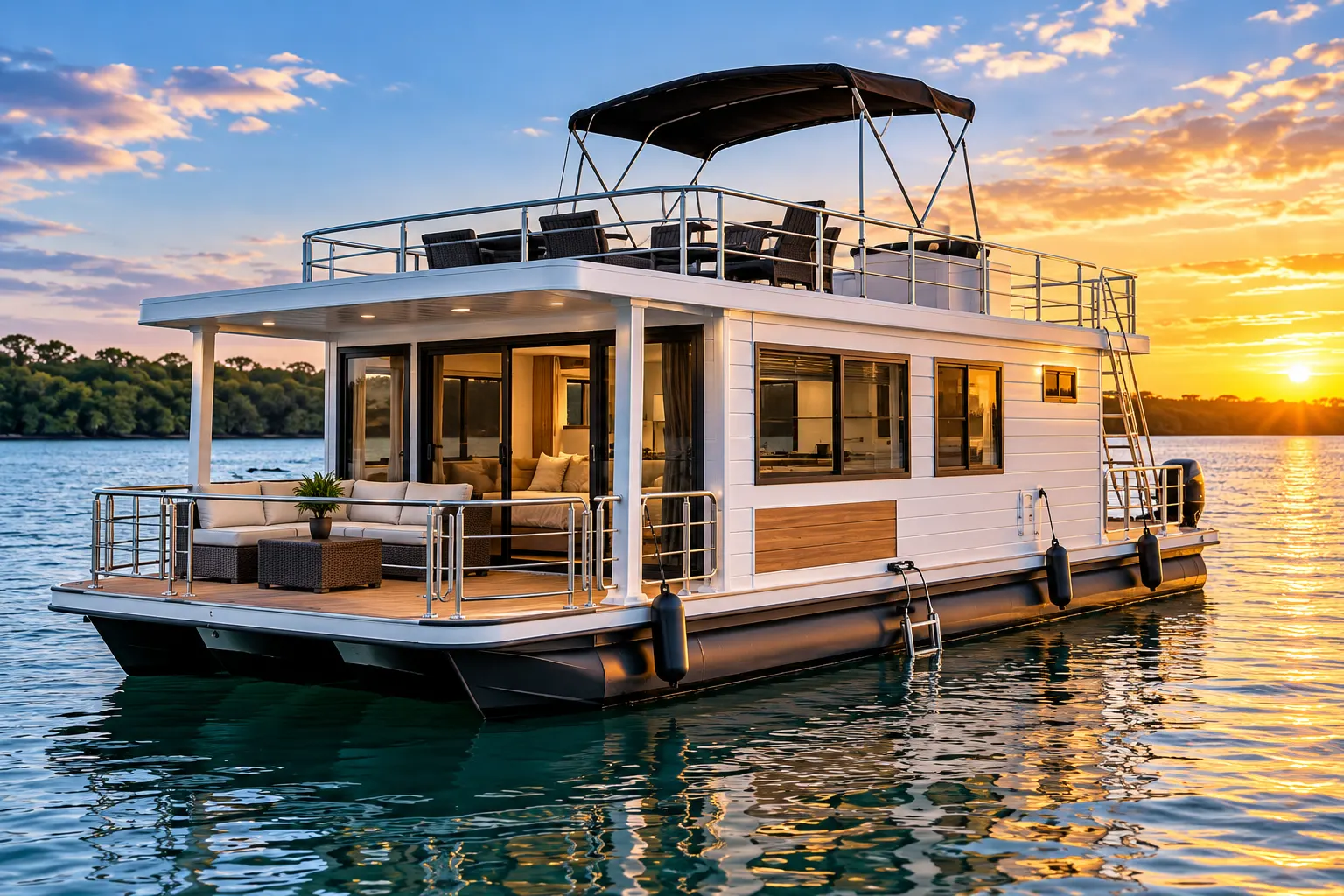
A houseboat is a type of boat designed to provide living space similar to a home. Unlike a regular boat that is mainly built for transportation, a houseboat is usually designed around comfort, relaxation, and spending extended periods on the water.
Depending on the design, a houseboat can be used as a weekend getaway, vacation accommodation, full-time residence, rental property, or simply a comfortable place to spend time on the water.
Houseboats come in many shapes and sizes. Some are simple floating homes with a bedroom and basic living area, while others have multiple bedrooms, kitchens, bathrooms, decks, air conditioning, entertainment areas, and other features you would expect in a traditional home.
If you have ever wondered what it is like to live on the water or spend a vacation on a floating home, understanding how houseboats work is a good place to start.
Key Takeaways
- A houseboat is a watercraft designed primarily for living, relaxing, or extended stays on the water.
- Houseboats can range from simple floating accommodations to large vessels with multiple bedrooms and luxury features.
- Some houseboats can travel, while others are designed mainly to remain in a marina or permanent location.
- Living on a houseboat requires access to essential services such as electricity, water, waste management, and transportation.
- The purchase price is not the only cost. Marina fees, maintenance, insurance, fuel, and utilities can all contribute to the overall expense.
- Houseboats can be excellent for fishing, swimming, recreation, and waterfront living, but weather, safety, regulations, and maintenance need to be considered.
What Is a Houseboat?
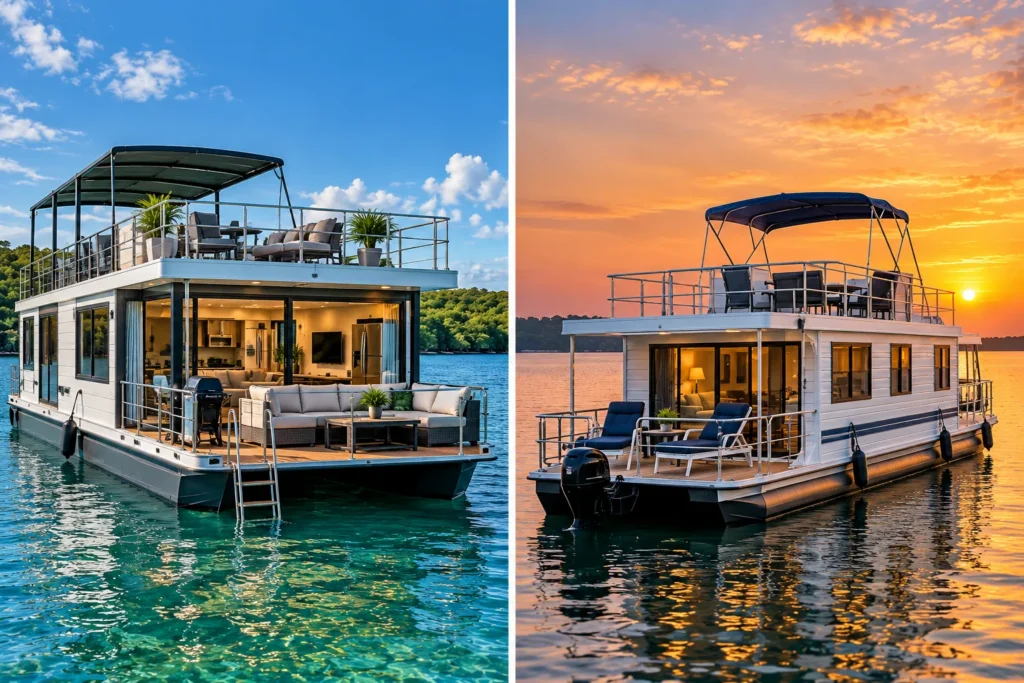
A houseboat is a watercraft designed primarily for living or leisure rather than fast transportation.
It typically has a relatively wide and stable hull that provides space for a cabin or living area above the water.
The exact design depends on the type of houseboat.
Some houseboats are motorized and can travel between locations. Others are designed to remain in one place for most of their lives.
A houseboat may include:
- Bedrooms
- Bathrooms
- Kitchen
- Living room
- Dining area
- Outdoor deck
- Storage areas
- Electrical systems
- Freshwater tanks
- Wastewater systems
- Heating or air conditioning
Larger houseboats can have several separate living spaces and multiple outdoor areas.
How Does a Houseboat Work?
A houseboat works much like a combination of a home and a boat.
The hull provides buoyancy and keeps the structure floating. The living area sits above the hull.
If the houseboat is designed to move, it may have one or more engines and a steering system.
Houseboats that remain in marinas or designated areas may rely on shore power for electricity and connect to marina water and wastewater services.
Others are designed to operate independently using systems such as:
- Batteries
- Generators
- Solar panels
- Freshwater tanks
- Water heaters
- Holding tanks
The systems vary considerably depending on the boat.
Can Houseboats Move?
Yes, many houseboats can move.
However, speed and maneuverability are generally not their main priorities.
A houseboat designed for cruising may have an engine and navigation equipment that allow it to travel between locations.
Other houseboats are primarily intended to stay in a marina or at a permanent mooring.
Before buying or renting one, it is important to understand whether the particular houseboat is designed for regular travel or mainly for stationary living.
How Fast Does a Houseboat Go?
Houseboats are generally much slower than many recreational boats. Speed depends on the hull design, engine, size, weight, and water conditions.
Some recreational houseboats may cruise at relatively modest speeds, while specialized designs can travel faster.
However, houseboat owners often care more about comfortable cruising and stability than maximum speed.
The large living area and wide hull can make a houseboat feel very different from a speedboat or personal watercraft.
What Is Inside a Houseboat?
The interior depends on the size and design.
A small houseboat may have a compact sleeping area, small kitchen, bathroom, and seating area.
Larger models can have features such as:
- Full kitchens
- Multiple bedrooms
- Private bathrooms
- Dining rooms
- Large living rooms
- Laundry facilities
- Refrigerators
- Ovens
- Showers
- Air conditioning
- Heating
- Entertainment systems
Some luxury houseboats can feel surprisingly similar to apartments or small homes.
Do Houseboats Have Bedrooms?
Yes.
Many houseboats have dedicated sleeping areas.
Smaller models may have one bedroom or convertible sleeping spaces.
Larger houseboats can have several bedrooms.
The sleeping arrangements are usually designed to make efficient use of limited space.
Some houseboats have bedrooms below the main deck, while others use the upper levels for sleeping areas.
Do Houseboats Have Bathrooms?
Many houseboats have bathrooms. A typical bathroom may include a toilet, sink, and shower.
The wastewater system depends on the boat. Some houseboats connect to marina sewage systems, while others use holding tanks.
If you are considering living aboard a houseboat, understanding how the toilet and wastewater systems work is especially important.
Do Houseboats Have Kitchens?
Yes.
Houseboat kitchens can range from very basic cooking areas to full kitchens.
Depending on the size of the vessel, a kitchen may include:
- Refrigerator
- Stove
- Oven
- Sink
- Cabinets
- Counter space
- Microwave
Cooking on a houseboat can be very similar to cooking in a small home, although storage and counter space are usually more limited.
Where Are Houseboats Usually Kept?
Houseboats can be found in many different environments.
Common locations include:
- Lakes
- Rivers
- Marinas
- Canals
- Coastal waterways
- Reservoirs
The location matters because local laws and marina rules can determine where a houseboat can be kept.
Some waterways may allow long-term mooring, while others have strict restrictions.
Can You Live on a Houseboat?
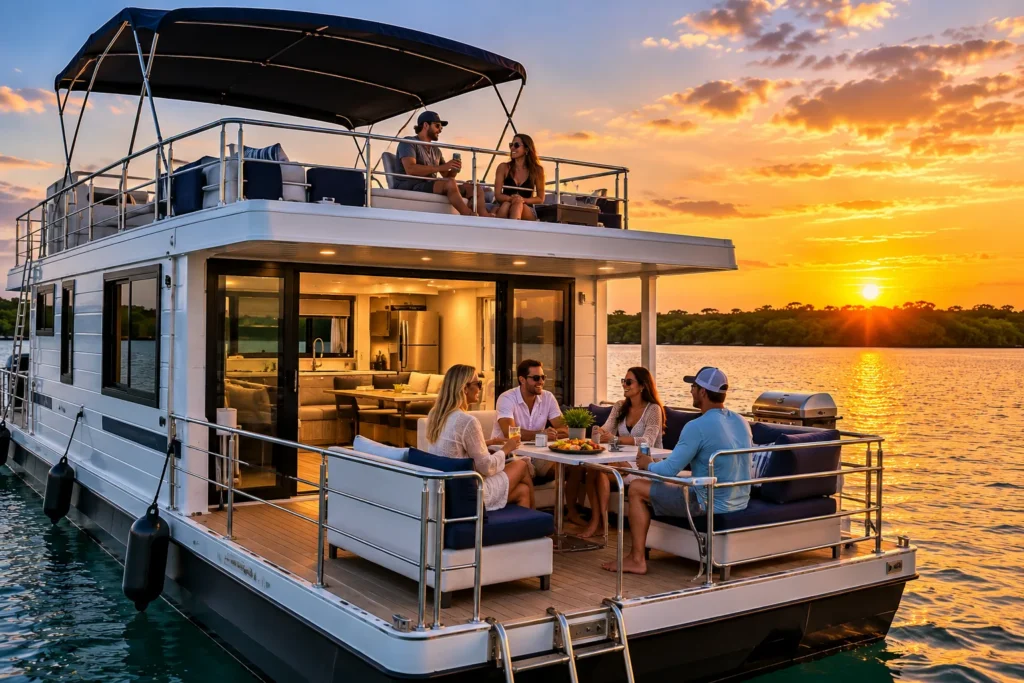
Yes, some houseboats are designed for full-time living.
Living aboard can provide a very different lifestyle from living in a traditional house or apartment.
You may wake up surrounded by water, have a deck overlooking the shoreline, and enjoy a quieter environment.
However, full-time houseboat living also requires planning.
You need reliable access to:
- Electricity
- Drinking water
- Waste disposal
- Internet or communication
- Fuel
- Groceries
- Transportation
The practicality of living aboard depends heavily on the marina and location.
Is Living on a Houseboat Cheaper Than Living in a House?
Not necessarily.
One common misconception is that living on a houseboat is automatically cheaper than owning a home.
The total cost depends on the boat, location, marina fees, insurance, maintenance, fuel, utilities, financing, and other expenses.
A houseboat may have a lower purchase price than a traditional home in some areas, but ongoing costs can add up.
Marina fees alone can be significant depending on the location and services provided.
It is important to consider the total cost of ownership rather than just the purchase price.
How Much Does a Houseboat Cost?
Houseboat prices vary enormously.
A small used houseboat may cost considerably less than a large luxury model.
Newer and larger houseboats with multiple bedrooms, upgraded interiors, modern navigation systems, and luxury features can cost substantially more.
The price depends on:
- Size
- Age
- Manufacturer
- Engine
- Condition
- Interior features
- Location
- Equipment
- Maintenance history
The purchase price is only one part of the financial picture.
What Are the Advantages of a Houseboat?
Houseboats offer several benefits.
Life on the Water
The biggest attraction is the opportunity to spend more time on the water.
You can enjoy views, sunsets, fishing, swimming, and outdoor activities directly from your home or vacation accommodation.
Unique Lifestyle
Living on a houseboat is very different from living in a traditional property.
For people who enjoy boating and waterfront environments, this lifestyle can be extremely appealing.
Outdoor Space
Many houseboats have decks or rooftop areas.
These spaces can be used for relaxing, dining, fishing, or entertaining guests.
Vacation Use
A houseboat can also provide a unique vacation experience without requiring a traditional hotel room.
What Are the Disadvantages of a Houseboat?
Houseboat living is not perfect for everyone.
Maintenance
A houseboat requires regular maintenance.
The hull, engine, electrical systems, plumbing, roof, exterior surfaces, and other components all need attention.
Limited Space
Even large houseboats have space limitations compared with traditional homes.
Storage can become a challenge.
Weather
Wind, waves, storms, and changing water levels can affect a houseboat.
Owners need to understand local weather conditions and prepare appropriately.
Marina Costs
If the houseboat is kept at a marina, slip fees and other charges can become a significant ongoing expense.
Do Houseboats Need Engines?
Not all houseboats need an engine.
Some are designed to remain permanently moored and may be moved only occasionally by another vessel or towing service.
Cruising houseboats generally have engines.
If you want to travel regularly, you should choose a houseboat designed for navigation rather than assuming any floating home can safely travel long distances.
Are Houseboats Stable?
Houseboats are generally designed to be stable on the water.
Their wide hulls and relatively low-speed operation can provide a stable platform.
However, stability depends on the design, weight distribution, weather, water conditions, and how the boat is loaded.
A houseboat is not immune to waves or strong winds.
Large bodies of water can become rough, and conditions should always be considered before traveling.
Can You Fish From a Houseboat?
Yes.
Fishing is one of the enjoyable activities associated with houseboat life.
Many houseboats have decks that provide convenient access to the water.
You can fish directly from the boat or use the houseboat as a base while exploring nearby fishing areas.
Local fishing regulations still apply, including licensing requirements, seasons, size limits, and catch limits.
Can You Swim From a Houseboat?
Many people use houseboats as a base for swimming.
However, swimming from any boat requires attention to water depth, current, weather, boat traffic, and local rules.
A proper boarding ladder and appropriate safety equipment are important.
You should also know how to get back onto the boat if you enter the water.
Are Houseboats Safe?
Houseboats can be safe when properly maintained and operated responsibly.
Safety equipment may include:
- Life jackets
- Fire extinguishers
- Smoke alarms
- Carbon monoxide detectors
- Navigation lights
- First-aid equipment
- Emergency communication equipment
The exact requirements vary by location and vessel.
Regular inspection and maintenance are important because electrical, fuel, gas, and mechanical problems can create serious risks on any boat.
What Is the Difference Between a Houseboat and a Floating Home?
The terms can overlap, but they are not always the same.
A houseboat is generally designed as a boat or watercraft with living accommodations.
A floating home may be designed primarily as a residence and may not be intended to navigate independently.
The distinction can also have legal and regulatory implications.
If you are buying a property on the water, check how local authorities classify the structure because that classification can affect registration, taxes, insurance, marina requirements, and where it can be kept.
What Is the Difference Between a Houseboat and a Yacht?
The biggest difference is usually the intended design.
A yacht is generally designed for cruising and boating, while a houseboat places greater emphasis on living space and comfort.
Some luxury houseboats can have amenities similar to yachts, but their hull designs and handling characteristics can be very different.
A yacht may be designed for longer-distance travel and higher performance, while a houseboat is often designed around a spacious living area.
Can You Rent a Houseboat?
Yes.
Houseboat rentals are available in many popular waterfront destinations.
Rental options range from small boats suitable for couples or small families to large vessels designed for groups.
Before renting, check:
- Number of sleeping spaces
- Bathroom facilities
- Kitchen equipment
- Maximum passenger capacity
- Fuel requirements
- Navigation rules
- Deposit requirements
- Required boating license
- Weather policies
Rental requirements vary by location and operator.
What Should You Look for When Buying a Houseboat?
If you are considering buying one, look beyond the interior appearance.
Check the:
- Hull condition
- Engine
- Electrical system
- Plumbing
- Roof
- Windows
- Fuel system
- Wastewater system
- Navigation equipment
- Maintenance records
A marine survey can also be valuable when purchasing a used vessel.
The survey can identify problems that may not be obvious during a casual inspection.
How Do You Maintain a Houseboat?
Maintenance depends on the boat, but common tasks include checking the engine, inspecting the hull, maintaining batteries, cleaning the exterior, checking plumbing, and inspecting electrical systems.
Regular maintenance is particularly important because water exposure can accelerate deterioration of certain materials.
Owners should follow the manufacturer’s maintenance recommendations and address small problems before they become expensive repairs.
Is a Houseboat Right for You?
A houseboat can be an excellent choice if you enjoy boating, waterfront living, and outdoor activities.
It may be a good fit if you want:
- A unique vacation property
- A weekend getaway
- A floating home
- Easy access to fishing
- More time on the water
- A different lifestyle
But it may not be ideal if you need large amounts of storage, want a traditional yard, dislike boat maintenance, or do not want to deal with marina and waterway regulations.
Frequently Asked Questions
Can a houseboat be moved to a different lake?
It depends on the size, design, transportation requirements, and regulations. Some houseboats can be transported over land, while others must be moved by water.
Do houseboats depreciate like cars?
Houseboats can depreciate, but their value depends on factors such as condition, age, location, demand, maintenance, and market conditions. They do not necessarily follow the same depreciation pattern as cars.
Can you get a mortgage for a houseboat?
Financing options vary. Some lenders offer specialized boat loans rather than traditional home mortgages. The type of financing available depends on the vessel and how it is legally classified.
Can you install solar panels on a houseboat?
Yes, solar panels can be installed on some houseboats. They can help provide electricity for batteries and onboard systems, although the available power depends on the size of the solar setup and energy requirements.
How do houseboats get drinking water?
Houseboats may use onboard freshwater tanks, marina water connections, or water filtration systems. The setup depends on whether the vessel is stationary or designed for cruising.
Can you have pets on a houseboat?
Many people keep pets on houseboats, but the suitability depends on the animal, boat design, access to shore, and safety considerations.
Do houseboats have anchors?
Many navigable houseboats have anchoring systems, but the exact equipment depends on the vessel and intended use.
Can a houseboat be used during winter?
Some houseboats can be used year-round, but cold-weather conditions require additional preparation. Freezing temperatures can affect plumbing, water systems, engines, and other equipment.
How long can a houseboat last?
There is no fixed lifespan. A well-built houseboat that receives proper maintenance can remain usable for many years, while neglected vessels can develop serious problems much sooner.
Can you customize a houseboat?
Many houseboats can be customized, but structural, electrical, weight, safety, and regulatory limitations need to be considered before making major modifications.
Conclusion
A houseboat is much more than a boat with a bed inside.
It is a combination of a watercraft and a living space, designed to give people the opportunity to spend extended periods on the water.
Some houseboats are simple and practical, while others offer multiple bedrooms, full kitchens, bathrooms, large decks, and luxury amenities.
Whether you want to rent one for a vacation or consider living aboard one permanently, it is important to understand how the boat operates, where it can be kept, how it is maintained, and what ongoing costs are involved.
For people who love the water, a houseboat can provide a lifestyle that is difficult to replicate with a traditional home. But like any major purchase, it requires realistic expectations and careful planning.
The best houseboat is not necessarily the biggest or most expensive one. It is the one that matches how you plan to use it, where you plan to keep it, and how much maintenance and responsibility you are comfortable managing.