
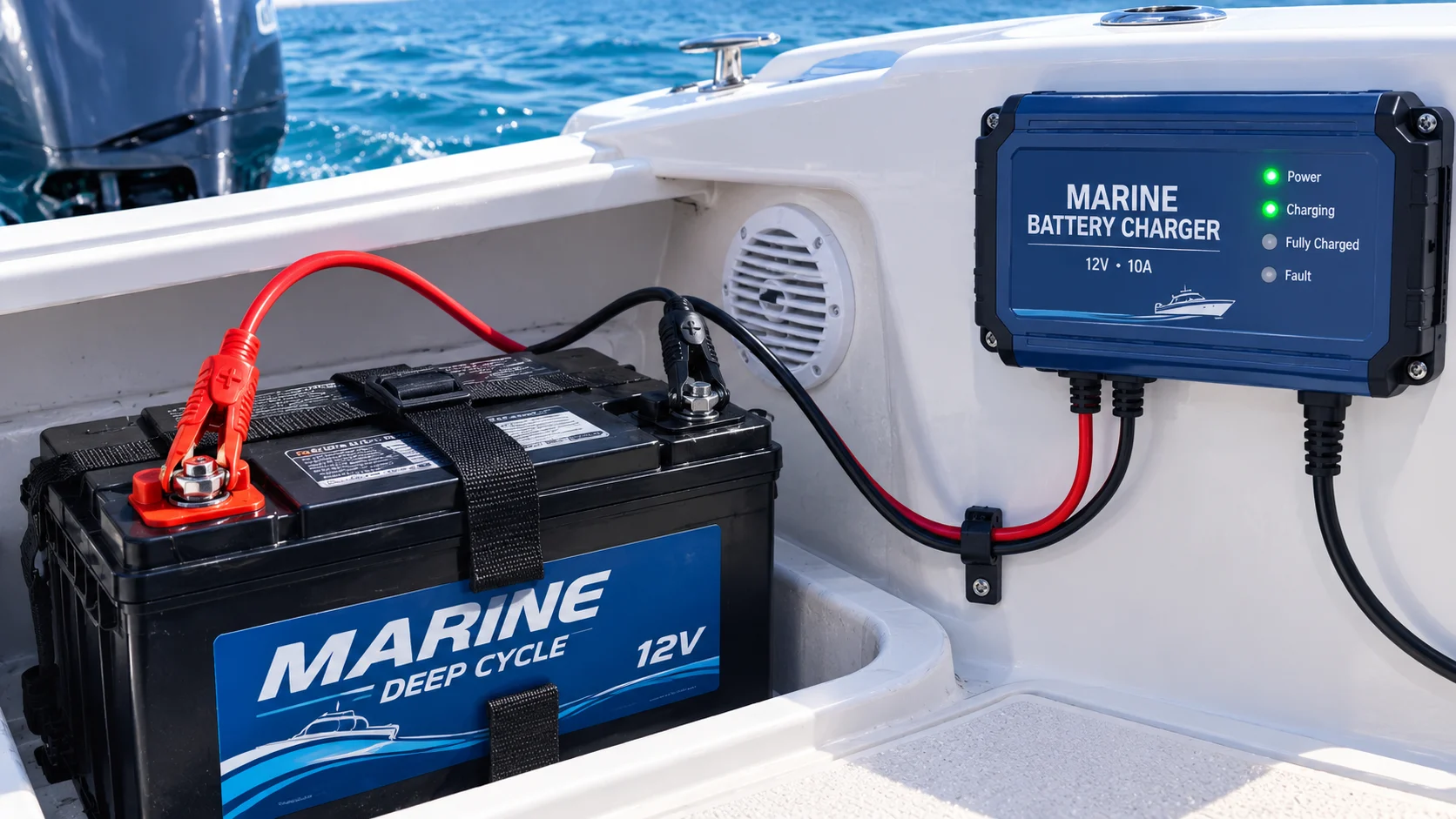
A fully charged boat battery is essential for a safe and enjoyable day on the water. It powers your boat’s engine, navigation lights, fish finder, radio, trolling motor, and other electrical equipment. If your battery isn’t properly charged, you could find yourself stranded or unable to start your boat.
The good news is that charging a boat battery is a straightforward process when you use the right equipment and follow basic safety precautions. In this guide, you’ll learn how to charge a boat battery, how long it takes, and how to keep it in good condition.
Why Is It Important to Charge a Boat Battery?
Boat batteries naturally lose charge over time, especially if the boat sits unused for weeks or months. Electrical accessories can also drain the battery, even when the engine is off.
Keeping your battery fully charged helps:
- Ensure reliable engine starts
- Extend battery life
- Improve electrical performance
- Reduce the risk of unexpected battery failure
- Keep onboard electronics working properly
Read More About –
- Common Boat Repair Issues and How to Fix Them
- Boat Docking – A Step-by-Step Guide
- Boat Insurance Cost: What Boat Owners Should Know
- Boat Wrapping Price Guide: How Much Does It Cost to Wrap a Boat?
Types of Boat Batteries
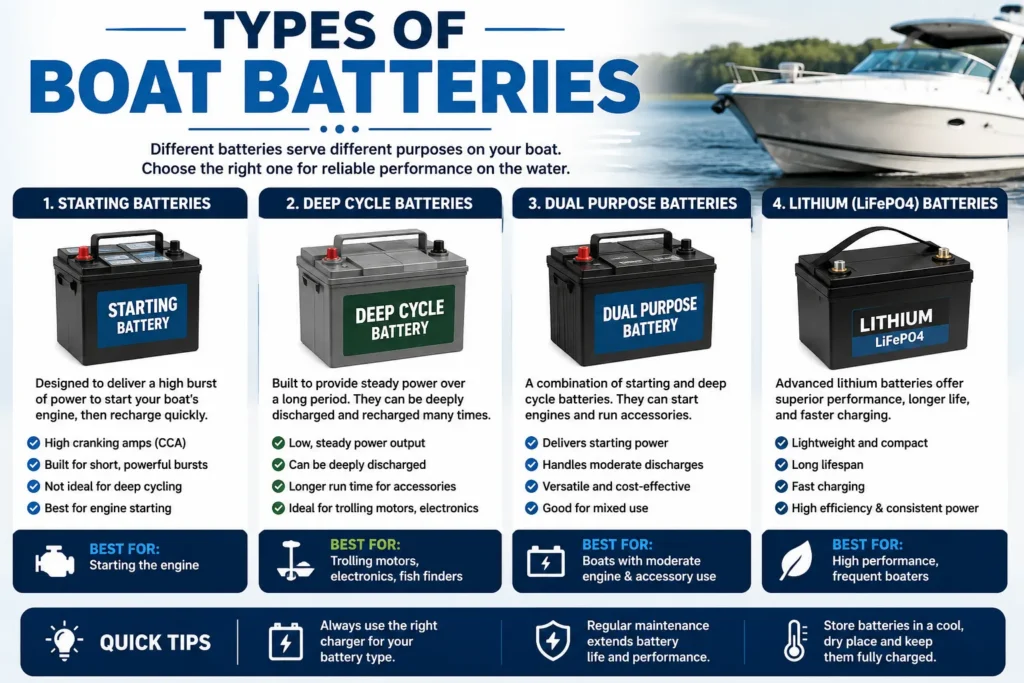
Before charging, identify the type of battery in your boat. Different batteries may require different charging settings.
Lead-Acid Battery
These are the most common boat batteries and include flooded batteries that require occasional maintenance.
AGM Battery
Absorbent Glass Mat (AGM) batteries are sealed, maintenance-free, and charge faster than many traditional batteries.
Gel Battery
Gel batteries are sealed and require a charger designed specifically for gel batteries to avoid damage.
Lithium Battery
Lithium marine batteries are lightweight, long-lasting, and usually require a compatible lithium battery charger.
Always check your battery label or owner’s manual before charging.
What You’ll Need
Gather the following before you begin:
- A marine battery charger
- Safety glasses
- Protective gloves
- A clean, dry workspace
- The boat battery
Choose a smart charger whenever possible. Smart chargers automatically adjust the charging rate and stop charging when the battery is full, reducing the risk of overcharging.
Safety Tips Before Charging
Safety should always come first.
Before charging your battery:
- Turn off the boat and all electrical equipment.
- Charge the battery in a well-ventilated area.
- Keep the battery away from sparks, flames, and cigarettes.
- Inspect the battery for cracks, leaks, or corrosion.
- Do not charge a damaged battery.
If you notice severe corrosion or swelling, replace the battery instead of attempting to charge it.
How to Charge a Boat Battery in 5 Simple Steps
Charging a boat battery the right way helps extend its life and keeps your boat ready for every trip. Whether you have a starting battery, deep cycle battery, or dual-purpose battery, following the correct process can prevent damage and ensure a safe, full charge. Below are 5 simple steps on how to charge a boat battery safely and efficiently.
Step 1: Turn Off All Power
Make sure the engine is off and all electrical accessories are switched off.
If the battery is still connected to the boat, turn the battery switch to the OFF position if your boat has one.
Step 2: Inspect the Battery
Check the battery terminals for dirt or corrosion.
If corrosion is present, clean the terminals using a battery terminal brush and an approved battery cleaning solution or a mixture of baking soda and water. Dry the terminals before connecting the charger.
Step 3: Connect the Charger
Most chargers have two clamps:
- Red clamp (positive)
- Black clamp (negative)
Connect them in this order:
- Attach the red clamp to the positive (+) battery terminal.
- Attach the black clamp to the negative (-) terminal.
Make sure the clamps are secure before turning on the charger.
Step 4: Select the Correct Charging Mode
Many modern chargers allow you to choose the battery type.
Select the setting that matches your battery:
- Flooded Lead-Acid
- AGM
- Gel
- Lithium
Using the wrong setting may reduce battery life or damage the battery.
Step 5: Start Charging
Turn on the charger after the clamps are connected.
Smart chargers automatically monitor the charging process and adjust the charging rate as the battery fills.
Avoid disconnecting the charger while it is operating.
How Long Does It Take to Charge a Boat Battery?
Charging time depends on several factors, including:
- Battery size
- Battery capacity
- State of charge
- Charger output
A partially discharged battery may take only a few hours, while a deeply discharged battery can take much longer.
Higher-amp chargers charge batteries faster, but it’s generally better to use the charging rate recommended by the battery manufacturer.
How Do You Know When the Battery Is Fully Charged?
Many smart chargers have indicator lights or digital displays that show when charging is complete.
You may see:
- A green light
- A “Fully Charged” message
- A maintenance or float mode indicator
If you’re using a manual charger, monitor the battery carefully and disconnect it once it reaches a full charge.
Disconnect the Charger
Once charging is complete:
- Turn off the charger.
- Remove the black (negative) clamp.
- Remove the red (positive) clamp.
Store the charger in a clean, dry location.
Common Charging Mistakes
Avoid these common errors:
- Using the wrong charger setting
- Connecting the clamps to the wrong terminals
- Charging a damaged battery
- Charging in an enclosed, unventilated space
- Overcharging the battery
- Ignoring corrosion on the terminals
These mistakes can shorten battery life or create safety hazards.
Tips to Extend Boat Battery Life
Proper maintenance can help your battery last longer.
- Recharge the battery after every trip.
- Keep the battery clean and dry.
- Store it in a cool, dry place during the off-season.
- Use a smart charger or battery maintainer if the boat will sit unused for long periods.
- Check battery terminals regularly for corrosion.
- Avoid allowing the battery to remain deeply discharged.
Should You Use a Battery Maintainer?
If your boat is stored for weeks or months, a battery maintainer, also called a trickle charger, is a good investment.
Unlike a standard charger, it supplies only the amount of power needed to keep the battery fully charged without overcharging it. This helps maintain battery health during long periods of storage.
FAQs on How To Charge A Boat Battery
Can I charge a boat battery while it is still installed in the boat?
Yes, in many cases you can charge a boat battery while it is installed, provided the charger is compatible and you follow the manufacturer’s safety instructions. Ensure the area is well-ventilated and all electrical equipment is turned off.
Can I use a car battery charger to charge a boat battery?
It depends on the battery type and charger. A charger designed for marine batteries is generally recommended because it provides the appropriate charging profile and helps protect the battery from damage.
How often should I charge my boat battery?
Recharge your boat battery after each use or whenever it becomes partially discharged. During long periods of storage, check the battery regularly or use a battery maintainer.
Can a completely dead boat battery be recharged?
Sometimes. If the battery has not suffered permanent damage, it may accept a charge. However, batteries that have been deeply discharged for an extended period may need to be replaced.
What should the voltage of a fully charged boat battery be?
A fully charged 12-volt lead-acid boat battery typically reads around 12.6 to 12.8 volts when at rest. AGM batteries may read slightly higher, while lithium batteries have different voltage ranges.
Is it safe to leave a smart charger connected overnight?
Yes. Most modern smart chargers automatically switch to maintenance or float mode once the battery is fully charged, making them safe to leave connected for extended periods. Always follow the charger’s instructions.
How can I tell if my boat battery needs to be replaced instead of recharged?
Signs include difficulty holding a charge, slow engine starts, swollen battery casing, leaking fluid, excessive corrosion, or a battery that repeatedly goes dead despite proper charging.
Can cold weather affect my boat battery?
Yes. Cold temperatures can reduce a battery’s performance and available power. Keeping the battery fully charged during colder months helps maintain its performance.
Should I remove the boat battery during winter storage?
In very cold climates, removing the battery and storing it in a cool, dry, frost-free location can help extend its lifespan. If left in the boat, use a battery maintainer if recommended by the manufacturer.
Can multiple boat batteries be charged at the same time?
Yes. Boats with multiple batteries can be charged using a multi-bank marine battery charger, which charges each battery independently and helps ensure they all receive the correct charging voltage.
Conclusion
Charging a boat battery is a simple but important part of routine boat maintenance. By using the correct charger, selecting the proper charging mode, and following safe charging practices, you can keep your battery in excellent condition and reduce the risk of unexpected failures on the water.
Regular charging and proper storage not only improve battery performance but can also extend its lifespan, saving you time and money in the long run. Whether you’re preparing for your next fishing trip or storing your boat for the season, taking a few minutes to properly charge and maintain your boat battery will help ensure it’s ready whenever you are.