
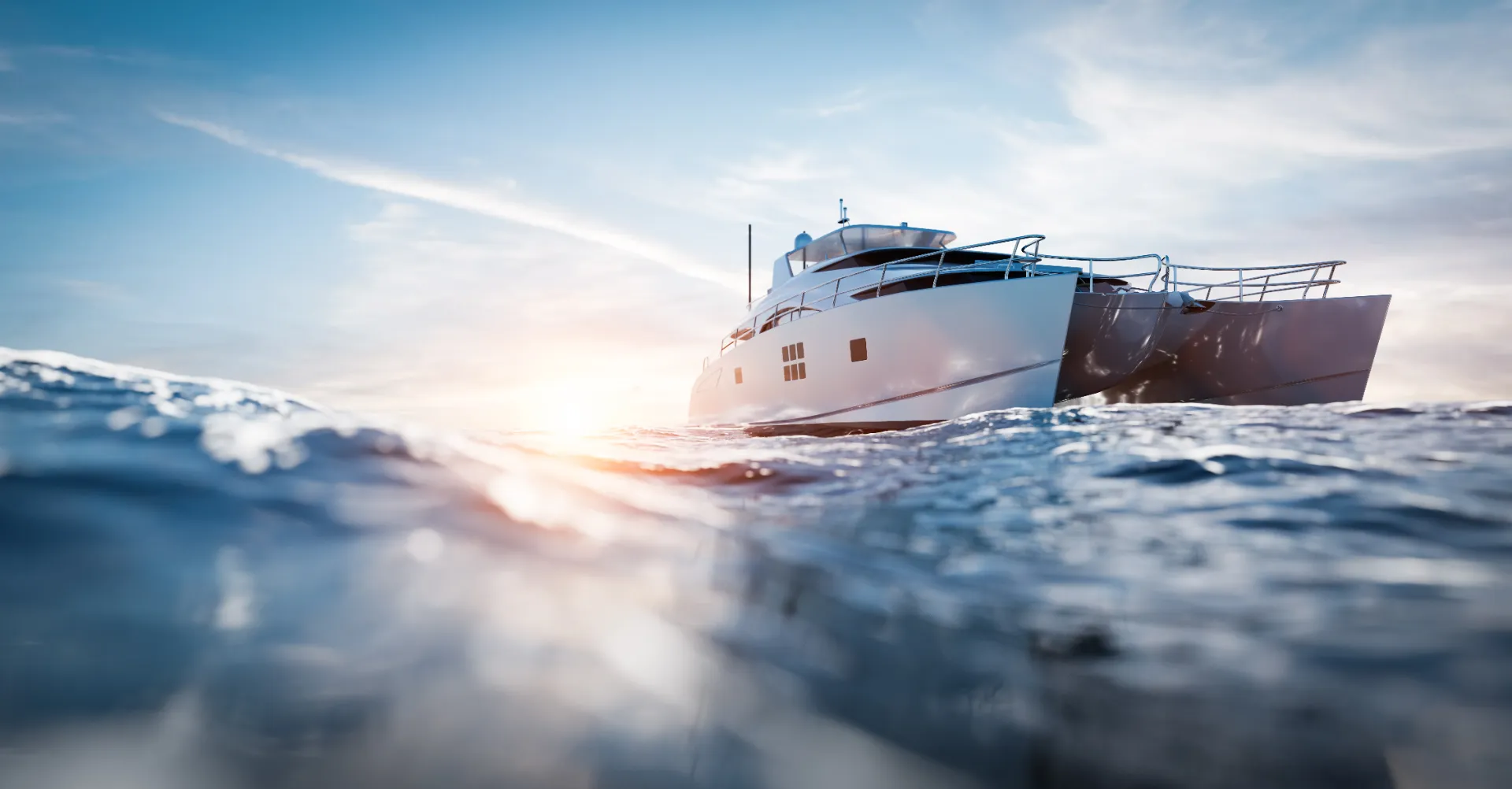
A catamaran is a type of boat or yacht with two parallel hulls connected by a central deck. Unlike traditional boats that have one hull, a catamaran has two separate hulls that help support the vessel on the water. This design gives it a different feel, with more space, good stability, and a comfortable ride for many types of boating activities.
Catamarans are popular for sailing trips, private charters, fishing, island hopping, and family vacations. You can find them in different sizes, from small sailing boats used for recreation to large luxury catamarans designed for overnight stays and extended trips.
If you have ever wondered why some boats have two hulls instead of one, the answer comes down to their design and how they perform on the water. Understanding the different types of catamarans, their advantages, and their uses can help you decide whether one is the right choice for your next boating experience.
Key Takeaways
- A catamaran is a boat with two parallel hulls connected by a deck, powered by sails or engines.
- Catamarans offer good stability, spacious decks, and comfortable layouts for boating activities.
- Common types include sailing catamarans, power catamarans, luxury catamarans, and fishing catamarans.
- Catamarans are popular for sightseeing, snorkeling, fishing, island hopping, and private boat trips.
- Before buying or booking a catamaran, consider its size, passenger capacity, cost, onboard amenities, and safety features.
What Does Catamaran Mean?
The word catamaran comes from the Tamil word kattumaram, which refers to logs tied together to form a simple watercraft. Over time, the term became associated with boats that use two parallel hulls connected by a shared structure.
Modern catamarans use advanced materials, engines, sails, and navigation equipment. However, the basic design remains the same. Two hulls provide support, while the space between them allows the boat to sit differently on the water compared with a traditional single-hull vessel.
Catamarans can be powered by sails, engines, or a combination of both. Their design makes them suitable for many activities, including recreational sailing, sightseeing, fishing, and private boat tours.
How Does a Catamaran Work?
A catamaran works by distributing the boat’s weight across two hulls instead of concentrating it in one. The hulls are connected by a deck or bridge structure that provides space for passengers, equipment, and other onboard features.
Because the hulls sit apart from each other, the boat has a wide base. This helps reduce side-to-side rolling in many conditions and provides a stable platform for passengers.
The two hulls also affect how the boat moves through the water. Many catamarans have relatively narrow hulls, which can reduce water resistance and help them travel efficiently. Their performance depends on several factors, including the hull shape, weight, engine power, sail design, and weather conditions.
On a sailing catamaran, wind fills the sails and moves the vessel forward. On a power catamaran, engines provide propulsion. Some larger models use two engines, which can also help with maneuvering and handling at low speeds.
Although catamarans are known for stability, they are not immune to rough seas or strong winds. Their handling characteristics differ from those of monohull boats, so operators need to understand the vessel and the conditions before heading out.
What Are the Different Types of Catamarans?
Catamarans come in several forms. The right type depends on how you plan to use the boat, how many people need to travel, and whether you prefer sailing or engine-powered boating.
1. Sailing Catamaran
A sailing catamaran uses sails to move through the water. It has two hulls connected by a deck, along with a mast, sails, and rigging.
These boats are popular among sailing enthusiasts because they offer a spacious layout and a stable platform. Larger sailing catamarans often include cabins, kitchens, bathrooms, and outdoor seating areas.
They are suitable for coastal cruising, island hopping, and multi-day sailing trips. Smaller versions are also used for recreational sailing and learning basic sailing skills.
2. Power Catamaran
A power catamaran uses one or more engines rather than relying primarily on sails. It is designed for people who want to travel by boat without depending on wind conditions.
Power catamarans are used for sightseeing, private charters, fishing, and longer coastal trips. Many models provide generous seating, open decks, and indoor areas for passengers.
Their fuel efficiency varies by model, speed, engine type, and load. Some power catamarans are designed for efficient cruising, while others prioritize speed or passenger capacity.
3. Luxury Catamaran
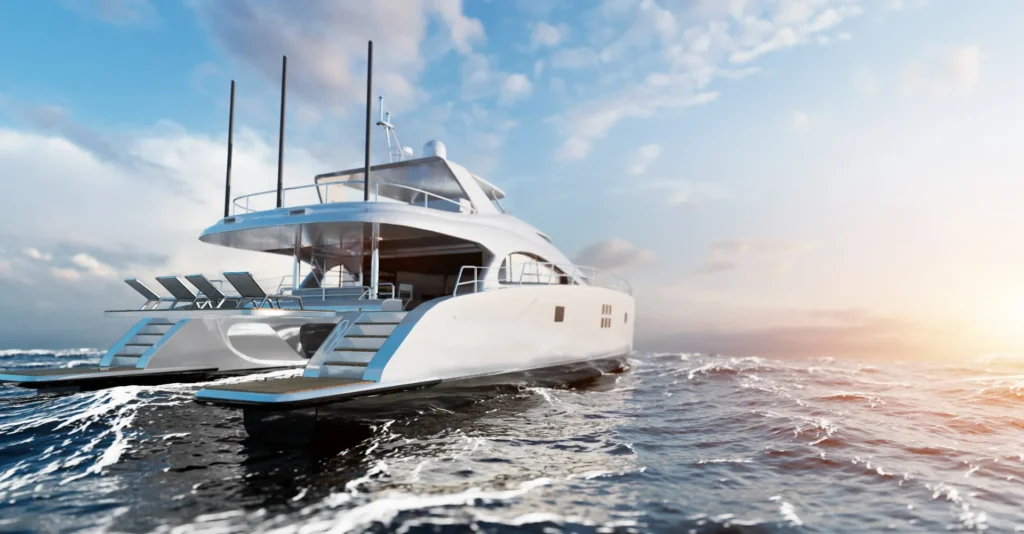
A luxury catamaran focuses on comfort, space, and onboard amenities. These vessels often feature private cabins, bathrooms, lounges, dining areas, and sunbathing spaces.
Some luxury catamarans are designed for private ownership, while others operate as charter yachts. Guests can book them for special occasions, family outings, celebrations, or private vacations.
The larger deck area gives designers more flexibility when arranging seating and entertainment spaces. Depending on the vessel, guests can enjoy shaded lounges, dining areas, or direct access to the water for swimming and snorkeling.
4. Fishing Catamaran
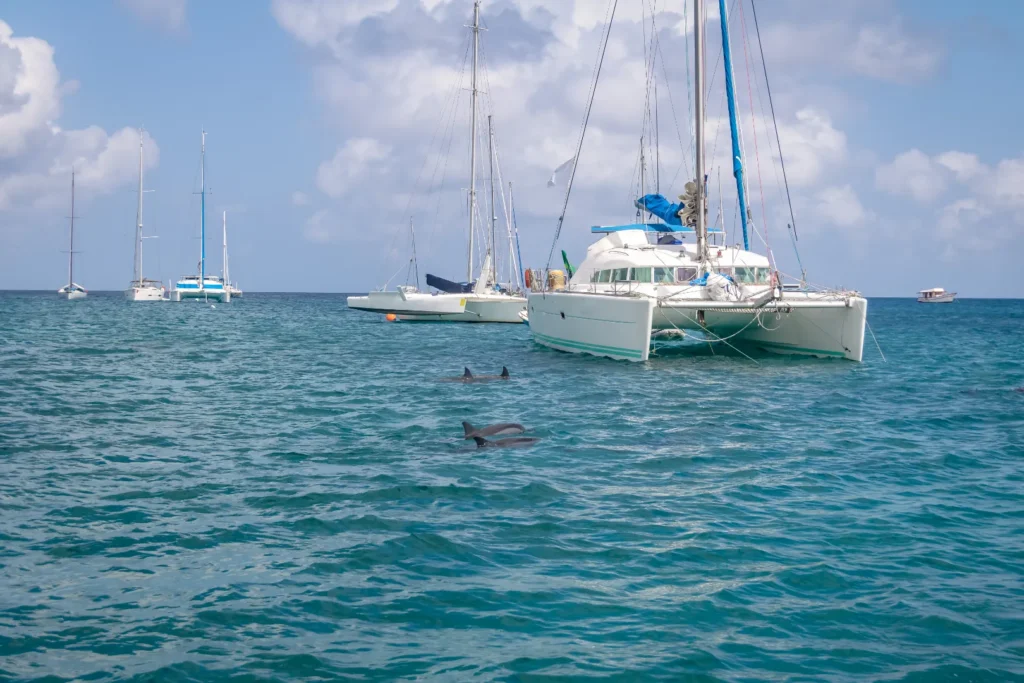
A fishing catamaran is designed for anglers who want a stable platform and enough room for fishing equipment. Many models feature open decks, rod holders, storage compartments, and space for several passengers.
The twin-hull design can be useful when moving around the boat or waiting in a fishing spot. However, fishing performance depends on the specific hull design, equipment, and sea conditions.
Fishing catamarans are available in different sizes, from smaller recreational boats to larger vessels designed for offshore trips.
5. Small Recreational Catamaran

Small recreational catamarans are commonly used for sailing practice, beach activities, and short trips. They often have a simple design, with limited seating and fewer onboard amenities.
These boats can be a practical option for beginners who want to learn sailing or enjoy time on the water without operating a large vessel.
Their size makes them easier to transport or store in some cases, although requirements vary depending on the model.
What Are the Advantages of a Catamaran?
Catamarans offer several benefits that make them attractive to boat owners and passengers.
Better Stability
One of the main reasons people choose a catamaran is its stability. The two hulls sit apart from each other, creating a wide platform that helps limit side-to-side rolling compared with many conventional monohull boats.
This can make the experience more comfortable for passengers, especially during sightseeing trips, meals, and other activities onboard.
However, stability depends on the design and the conditions. A catamaran can still experience significant movement in rough water.
More Space
Catamarans often provide more usable deck space than a monohull of a similar length. The area between the hulls supports a wide deck, while the hulls themselves can accommodate cabins, storage, or mechanical equipment.
On larger models, this layout can create separate areas for relaxing, dining, and enjoying the view.
For private charters, the additional room can make a difference when several people are traveling together.
Comfortable for Groups
The wide layout of many catamarans makes them suitable for families, friends, and organized tours. Passengers can spread out instead of sitting in one narrow area.
Depending on the vessel, there might be open seating, shaded sections, indoor lounges, and easy access to the water.
This is one reason catamarans are commonly used for sightseeing trips, snorkeling excursions, and private boat outings.
Efficient Cruising
Some catamarans are designed to move through the water with relatively low resistance. This can improve fuel efficiency or sailing performance under suitable conditions.
However, a catamaran is not automatically more fuel-efficient than every monohull. Weight, speed, engine size, hull shape, and operating conditions all affect fuel consumption.
Choosing the right boat requires looking at its actual performance specifications rather than relying on the hull design alone.
Shallow Water Access
Many catamarans have a relatively shallow draft, meaning they do not need as much water beneath them as some deeper-hulled boats.
This can be useful when exploring certain coastal areas, shallow bays, or sheltered waterways. Sailing catamarans with daggerboards or centerboards can have different draft requirements depending on their configuration.
Before visiting a shallow area, operators should check the vessel’s draft, tides, charts, and local navigation conditions.
Are There Any Disadvantages to a Catamaran?
Although catamarans offer many benefits, they are not the right choice for every situation.
Higher purchase costs: Some catamarans cost more to buy than comparable monohull boats. Their wider beam can also affect storage, marina access, and transportation costs.
Docking challenges: A wide vessel needs more space at a dock or marina. This can make finding suitable berths more difficult in busy destinations.
Different handling characteristics: Catamarans respond differently to wind, waves, and turning movements than single-hull boats. Operators need experience or appropriate training to handle them safely.
Bridge deck movement: On some designs, waves can strike the underside of the structure connecting the hulls. This is known as bridge deck slamming and can affect comfort in certain sea conditions.
Maintenance expenses: Two hulls and multiple engines on some models can mean additional maintenance requirements. The actual cost depends on the vessel’s design, age, equipment, and usage.
Understanding these limitations helps boaters choose a catamaran that suits their budget and intended activities.
What Is the Difference Between a Catamaran and a Monohull?
The main difference is the number of hulls. A catamaran has two parallel hulls, while a monohull has one.
| Feature | Catamaran | Monohull |
| Hull design | Two hulls | One hull |
| Stability | Often less side-to-side rolling at anchor | Can have more rolling, depending on design |
| Deck space | Often wider and more open | Usually narrower for a similar length |
| Draft | Often shallow on suitable models | Varies by hull design |
| Marina space | Requires a wider berth | Often fits narrower berths |
| Sailing behavior | Different handling and stability characteristics | Typically heels under sail |
| Best suited for | Space, group trips, and cruising | A wide range of boating and sailing activities |
Neither design is better in every situation. The best option depends on your budget, travel plans, experience, and personal preferences.
What Is a Catamaran Used For?
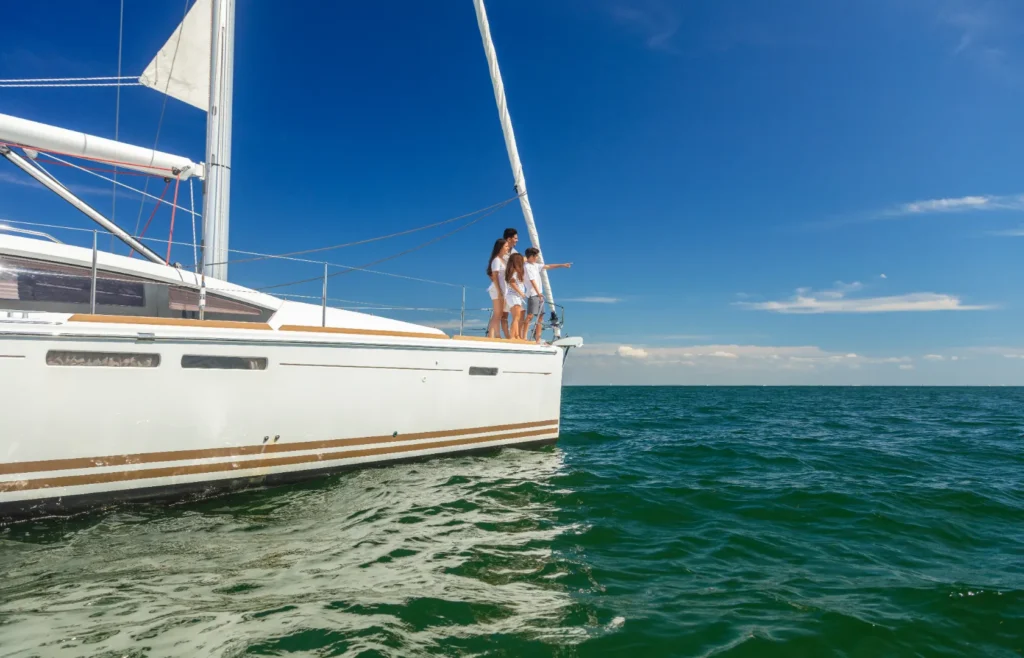
Catamarans serve many purposes, both recreational and commercial.
Sightseeing and Private Boat Tours
Catamarans are popular for coastal sightseeing because they can accommodate groups and provide open views of the surrounding water.
Passengers can enjoy the scenery, take photographs, and relax while a captain handles navigation. Some tours focus on wildlife viewing, sunset cruises, or exploring nearby islands.
Snorkeling and Swimming Trips
Many charter operators use catamarans for trips to snorkeling locations and swimming areas. Their deck layouts can provide room for guests to prepare their equipment and relax between activities.
The exact amenities depend on the boat. Some include ladders, freshwater showers, and equipment storage.
Fishing Trips
Fishing catamarans provide space for anglers and their gear. Depending on the boat, they can be used for inshore fishing, coastal trips, or offshore excursions.
Passengers should check the operator’s safety equipment, fishing arrangements, and weather policy before booking.
Island Hopping
Sailing and power catamarans can be suitable for traveling between islands and coastal destinations. Larger models provide cabins and onboard facilities for longer journeys.
Their range, cruising speed, and passenger capacity depend on the specific vessel.
Private Celebrations
A catamaran can be a good setting for birthdays, anniversaries, small celebrations, and private gatherings. The wide deck gives guests room to socialize while enjoying views of the water.
Before booking, confirm the permitted passenger capacity, catering arrangements, available shade, and any restrictions on decorations or activities.
Is a Catamaran Good for Beginners?
A catamaran can be a good option for beginners, but the answer depends on the type of boat and the activity.
Small recreational sailing catamarans can help beginners learn how sails respond to wind. Larger power catamarans can also be comfortable for passengers who want to enjoy boating without learning to sail.
However, operating a boat requires more than understanding its basic design. Beginners need to learn navigation, weather awareness, safety procedures, and local boating rules.
If you are planning to operate a catamaran yourself, consider taking a boating or sailing course. If you simply want to enjoy a trip, booking a charter with an experienced captain is a straightforward alternative.
How Much Does a Catamaran Cost?
The cost of a catamaran varies widely depending on its size, age, brand, construction, and equipment.
Small recreational catamarans can cost a few thousand dollars, while larger sailing catamarans and power catamarans can cost tens or hundreds of thousands of dollars. New luxury catamarans can cost well over a million dollars.
Buying the boat is only one part of the expense. Owners also need to consider insurance, maintenance, fuel, storage, marina fees, safety equipment, and possible crew costs.
For people who only want to spend a day on the water, renting or booking a catamaran charter can be more practical than buying one.
Charter prices depend on the destination, boat size, trip duration, passenger count, and included services. Some operators offer shared trips, while others provide private bookings.
Is a Catamaran Worth It for a Boat Trip?
For many people, a catamaran offers a comfortable way to spend time on the water. The twin-hull design provides a wide platform, and larger vessels often have enough room for groups to relax without feeling crowded.
It can be a good choice for sightseeing, swimming, snorkeling, fishing, or a private coastal trip. Families and groups of friends often appreciate the open deck and different seating areas.
Still, the right boat depends on what you want from the experience. Consider the number of passengers, trip length, weather, available amenities, and total cost before making a booking.
If you are new to boating, a guided trip with a professional captain can help you enjoy the experience without worrying about operating the vessel yourself.
Frequently Asked Questions
What is the best size catamaran for a group of 10 people?
A catamaran that accommodates 10 passengers comfortably depends on the boat’s layout, available seating, and permitted passenger capacity. Check the operator’s specifications before booking.
How many people can fit on a catamaran?
Catamaran capacity varies by model. Small recreational boats carry only a few people, while larger charter catamarans can accommodate larger groups within their approved passenger limits.
Do catamarans have bathrooms and kitchens?
Many large sailing and luxury catamarans have bathrooms, kitchens, and dining areas. Smaller recreational models often have limited facilities or none at all.
Do you need a license to drive a catamaran?
Licensing requirements depend on the country, location, boat type, engine power, and intended use. Check local boating regulations before operating a catamaran.
How far can a catamaran travel in one day?
The distance depends on the vessel’s cruising speed, fuel capacity, wind conditions, and route. Motorized catamarans and sailing catamarans can have very different daily travel ranges.
Do catamarans get seasick less than other boats?
Some passengers experience less discomfort on a catamaran because its twin-hull design can reduce certain types of rolling. However, seasickness still depends on wave conditions and individual sensitivity to motion.
What should you bring on a catamaran trip?
Bring sunscreen, sunglasses, a hat, comfortable clothing, non-slip footwear, and any required medication. A towel, swimwear, and a waterproof bag are also useful for trips that include swimming.
Can a catamaran be used for overnight trips?
Yes, many cruising catamarans have sleeping cabins, bathrooms, kitchens, and storage for overnight travel. Confirm the sleeping capacity and onboard facilities before planning an extended trip.
What is the difference between a catamaran and a trimaran?
A catamaran has two hulls, while a trimaran has three, with one main hull and two smaller outer hulls. Both designs aim to improve stability and can be used for sailing or powered boating.
What should you check before booking a catamaran charter?
Check the total price, trip duration, passenger limit, safety equipment, weather cancellation policy, included activities, and whether a licensed captain is provided. Also confirm whether food, drinks, and snorkeling equipment are included.
Conclusion
A catamaran is more than a boat with two hulls. Its design offers a combination of stability, usable space, and flexibility that makes it suitable for a wide range of boating activities.
Whether you are interested in sailing, fishing, island hopping, or a relaxing day on the water, there is a catamaran designed for different needs and budgets. Understanding how these boats work and what to expect from them can help you make a more informed choice.
If you are planning your first catamaran trip, start by deciding what kind of experience you want. Compare available boats, check the included amenities, and choose an operator who prioritizes safety. With the right vessel and suitable conditions, a catamaran can be a memorable way to explore the water.