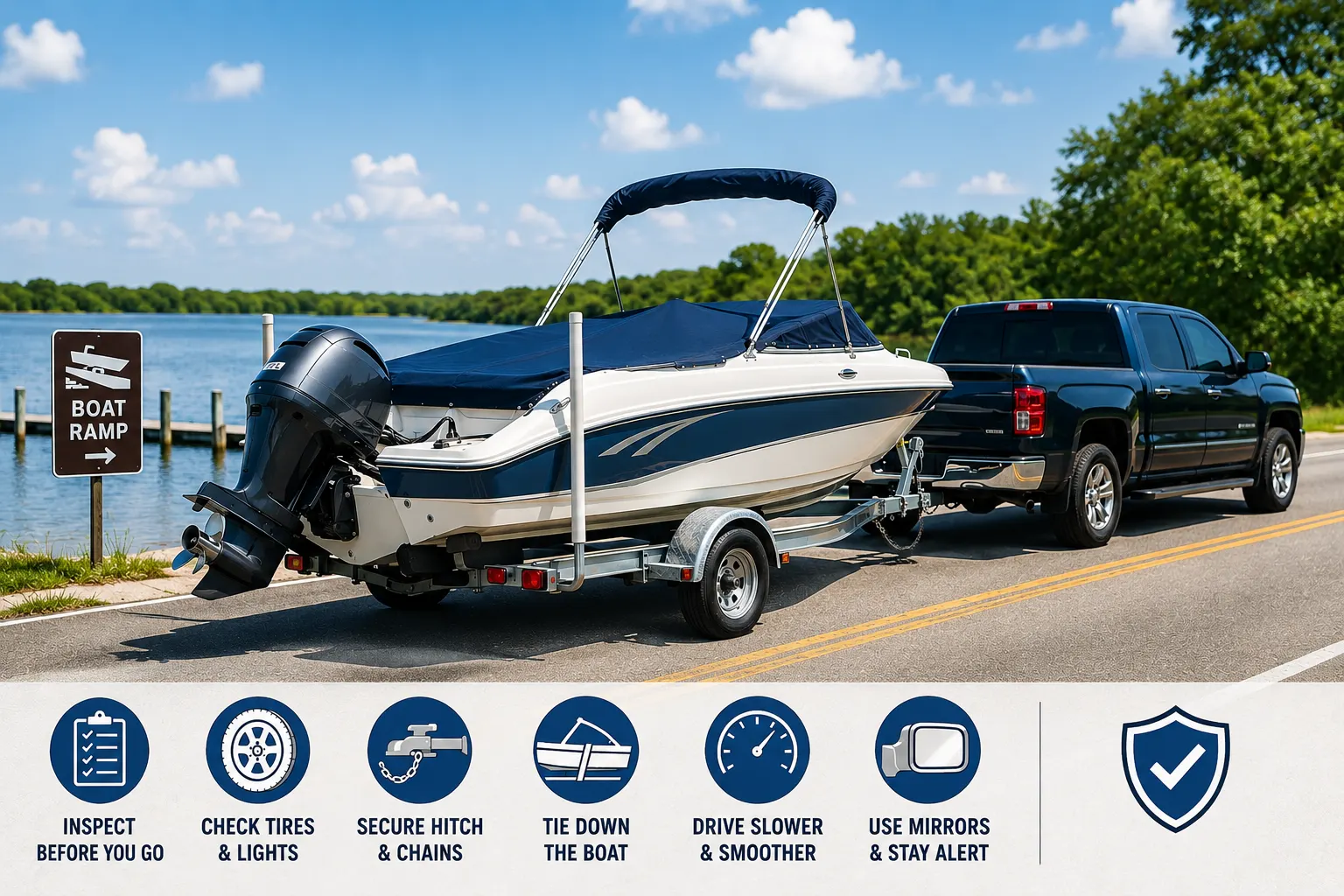
Towing a boat may seem straightforward, but it requires preparation, attention to detail, and safe driving practices. For beginners, the idea of pulling thousands of pounds of boat and trailer down the road can feel intimidating. However, with the right equipment, proper planning, and a basic understanding of towing safety, transporting your boat can become a routine and stress-free part of boating.
Whether you’re heading to a local boat ramp, planning a weekend fishing trip, or taking your boat on a long-distance adventure, learning how to tow a boat safely is essential. Safe towing protects not only your boat and vehicle but also other drivers on the road.
This guide covers everything beginners need to know about towing a boat safely, from choosing the right tow vehicle to launching at the ramp.
Why Boat Towing Safety Matters
Improper towing can lead to:
- Trailer sway
- Tire blowouts
- Brake failures
- Accidents
- Boat damage
- Vehicle damage
Many towing problems can be prevented through proper preparation and routine inspections.
A few minutes spent checking your equipment before departure can save you from costly repairs and dangerous situations later.
Know Your Tow Vehicle’s Capacity
Before towing a boat, you must understand your vehicle’s towing capacity.
Towing capacity refers to the maximum weight a vehicle can safely pull.
This information can typically be found in:
- Owner’s manual
- Manufacturer specifications
- Vehicle information sticker
Never exceed the recommended towing capacity.
Exceeding limits can:
- Reduce braking performance
- Damage the transmission
- Cause handling issues
- Increase accident risk
Calculate Your Total Towing Weight
Many beginners only consider the boat’s weight.
However, the total towing weight includes:
- Boat
- Trailer
- Fuel
- Batteries
- Gear
- Coolers
- Fishing equipment
- Water tanks
The combined weight may be significantly higher than expected.
Always calculate the complete load before towing.
Choose the Correct Trailer
Not all trailers are suitable for every boat.
The trailer should:
- Support the boat properly
- Match the boat’s size
- Match the boat’s weight
- Provide adequate stability
Using the wrong trailer can cause damage to both the boat and towing equipment.
Inspect the Trailer Before Every Trip
A trailer inspection should become part of your pre-trip routine.
Check:
- Tires
- Lights
- Brakes
- Safety chains
- Wheel bearings
- Coupler
- Winch strap
Even small issues can become serious problems during travel.
Check Trailer Tires Carefully
Trailer tire problems are among the most common towing issues.
Before each trip:
- Check tire pressure
- Look for cracks
- Inspect tread wear
- Verify lug nut tightness
Trailer tires often sit unused for long periods and may deteriorate even when they appear fine.
Proper inflation improves stability and reduces blowout risks.
Verify Trailer Lights Are Working
Working lights are essential for road safety.
Test:
- Brake lights
- Turn signals
- Running lights
- Hazard lights
Faulty lights can increase accident risks and may result in traffic violations.
Secure the Boat Properly
The boat must be firmly secured to the trailer.
Use:
- Transom straps
- Bow straps
- Safety chains
The boat should not move during transport.
Proper tie-downs help prevent shifting, bouncing, and trailer instability.
Check the Trailer Coupler
The trailer coupler connects the trailer to the hitch ball.
Before every trip:
- Ensure the coupler is fully seated
- Lock the coupler
- Verify proper fit
A loose connection can cause the trailer to detach while driving.
Attach Safety Chains Correctly
Safety chains provide backup protection if the coupler fails.
The chains should:
- Cross beneath the trailer tongue
- Have enough slack for turning
- Not drag on the road
Crossed chains can help support the trailer tongue if disconnection occurs.
Understand Tongue Weight
Tongue weight is the amount of downward force the trailer places on the hitch.
Generally, proper tongue weight is about:
- 10% to 15% of total trailer weight
Too little tongue weight can cause trailer sway.
Too much tongue weight can overload the rear of the tow vehicle.
Proper weight distribution is critical for safe towing.
Check Your Mirrors
Visibility becomes more important when towing.
Adjust mirrors so you can clearly see:
- The trailer
- Adjacent lanes
- Vehicles behind you
Extended towing mirrors may improve visibility for larger boats.
Practice Before a Long Trip
New boat owners should practice towing in a safe area before traveling on busy roads.
Practice:
- Turning
- Braking
- Backing up
- Parking
Confidence develops with experience.
Drive Slower Than Normal
Towing increases stopping distance and affects handling.
Reduce speed to improve:
- Stability
- Control
- Reaction time
Driving too fast is one of the most common causes of trailer sway.
Increase Following Distance
When towing a boat, your vehicle needs more distance to stop safely.
Leave additional space between you and the vehicle ahead.
This provides more time to react to sudden traffic changes.
Make Wider Turns
Trailers track differently than tow vehicles.
When turning:
- Start wider
- Turn gradually
- Watch trailer position
Sharp turns can cause trailer tires to strike curbs or obstacles.
Avoid Sudden Steering Movements
Abrupt steering can destabilize a trailer.
Use smooth movements when:
- Changing lanes
- Turning
- Avoiding obstacles
Gentle corrections help maintain control.
Learn How to Handle Trailer Sway
Trailer sway occurs when the trailer begins moving side to side.
If sway develops:
- Stay calm
- Reduce speed gradually
- Avoid sudden steering
- Do not accelerate aggressively
Proper loading and tongue weight help prevent sway.
Watch for Wind Conditions
Crosswinds can affect towing stability.
Large boats often create more wind resistance.
Pay extra attention when:
- Crossing bridges
- Driving in open areas
- Passing large trucks
Wind conditions may require reduced speeds.
Use Lower Gears on Hills
When traveling through hilly terrain:
- Shift into lower gears when necessary
- Use engine braking on descents
This helps reduce brake wear and improves control.
Be Careful at Boat Ramps
Boat ramps can be intimidating for beginners.
Before approaching the ramp:
- Prepare gear in advance
- Remove tie-downs when appropriate
- Insert drain plug
- Organize launch equipment
Avoid blocking the ramp while preparing.
Learn How to Back Up a Trailer
Backing up is one of the most challenging towing skills.
Basic tips include:
- Move slowly
- Use small steering inputs
- Practice often
- Use mirrors frequently
Many experienced boaters recommend practicing in an empty parking lot.
Check Wheel Bearings Regularly
Wheel bearings support trailer wheels and allow smooth rotation.
Failing bearings can cause:
- Overheating
- Wheel damage
- Breakdowns
Routine maintenance helps prevent costly repairs.
Carry Emergency Equipment
Every towing setup should include emergency supplies.
Useful items include:
- Spare tire
- Jack
- Lug wrench
- Flashlight
- Tire pressure gauge
- Reflective triangles
Being prepared can make roadside issues easier to manage.
Perform a Final Walkaround
Before every trip, perform a complete walkaround inspection.
Check:
- Hitch connection
- Safety chains
- Lights
- Tires
- Straps
- Boat position
This final check often catches overlooked problems.
Common Boat Towing Mistakes Beginners Make
Exceeding Tow Capacity
Overloading can create dangerous handling problems.
Forgetting Safety Chains
Safety chains provide critical backup protection.
Skipping Tire Inspections
Many towing failures begin with poorly maintained tires.
Driving Too Fast
Higher speeds increase accident risks.
Poor Weight Distribution
Improper loading often contributes to trailer sway.
Not Practicing Backing Up
Backing skills improve significantly with practice.
Benefits of Learning Proper Boat Towing Techniques
Safe towing provides several advantages.
These include:
- Greater confidence
- Reduced accident risk
- Less equipment damage
- Lower maintenance costs
- More enjoyable boating trips
Good towing habits protect both your investment and your safety.
FAQs About Towing a Boat
Do I need special training to tow a boat?
In most cases, special training is not required, but practicing towing and backing up before your first trip is highly recommended.
How often should trailer tires be replaced?
Even if tread appears good, many trailer tires should be replaced every few years due to age and wear.
Can I tow a boat in rainy weather?
Yes, but extra caution is necessary because wet roads increase stopping distances and reduce traction.
What causes a boat trailer to sway?
Common causes include improper loading, insufficient tongue weight, excessive speed, and strong crosswinds.
Should the boat be full of fuel while towing?
A full fuel tank adds weight. Consider total towing capacity when deciding how much fuel to carry during transport.
How do I know if my hitch ball is the correct size?
The hitch ball size must match the trailer coupler specifications exactly.
Is it safe to tow a boat on the highway?
Yes, when the vehicle, trailer, and load are properly matched and maintained.
How often should trailer bearings be serviced?
Maintenance schedules vary, but regular inspections and lubrication are important for safe towing.
Can I leave boating gear inside the boat while towing?
Yes, but gear should be secured properly to prevent movement and weight shifts.
What is the most important safety check before towing?
Many experts consider verifying the hitch connection, safety chains, lights, and tire condition the most critical pre-trip checks.
Conclusion
Learning how to tow a boat safely is an essential skill for every boat owner. While towing may seem intimidating at first, proper preparation, routine inspections, safe driving habits, and regular practice can make the experience much smoother and more enjoyable.
By understanding your vehicle’s towing capacity, securing your boat correctly, maintaining your trailer, and staying alert on the road, you can greatly reduce risks and travel with confidence. Whether you’re heading to a nearby lake, launching at a coastal marina, or planning a fishing adventure, following these beginner boat towing tips can help ensure a safe and stress-free journey.
For boaters visiting the Florida Keys, preparation is especially important when towing long distances. Destinations such as Robbie’s Marina Key West offer a variety of boating amenities and access to marine support services, making them convenient stops for those exploring the Keys by boat. With proper towing practices and careful planning, you can spend less time worrying about transportation and more time enjoying your time on the water.